5W 355nm UV
Water Cooled
3D Sub-Surface Specialist
18 Month Warranty
Free Shipping
FreeDDP to US, CA
and EU
and EU
355nmUV wavelength
cold marking
cold marking
K9 CrystalOptical glass
compatible
compatible
18 MonthsFull machine
warranty
warranty
LifetimeEmail tech
support
support
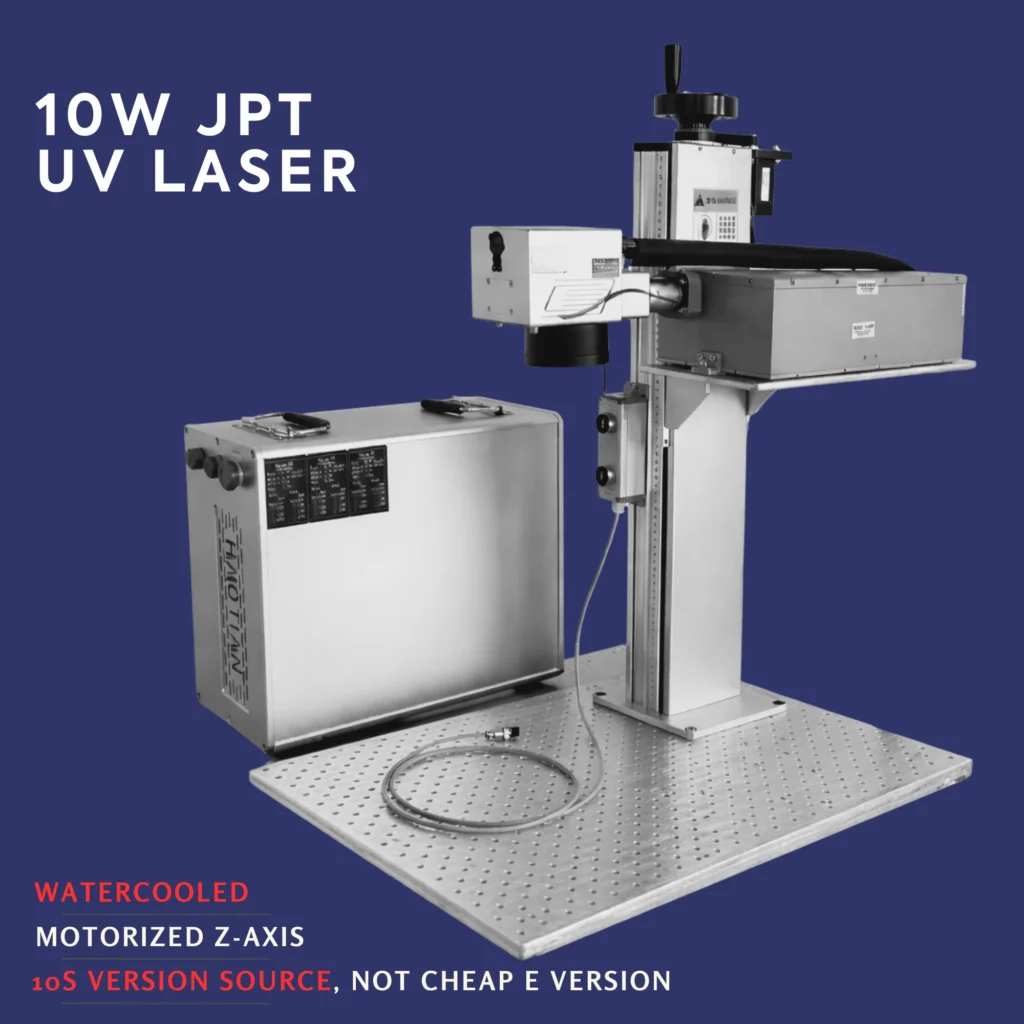
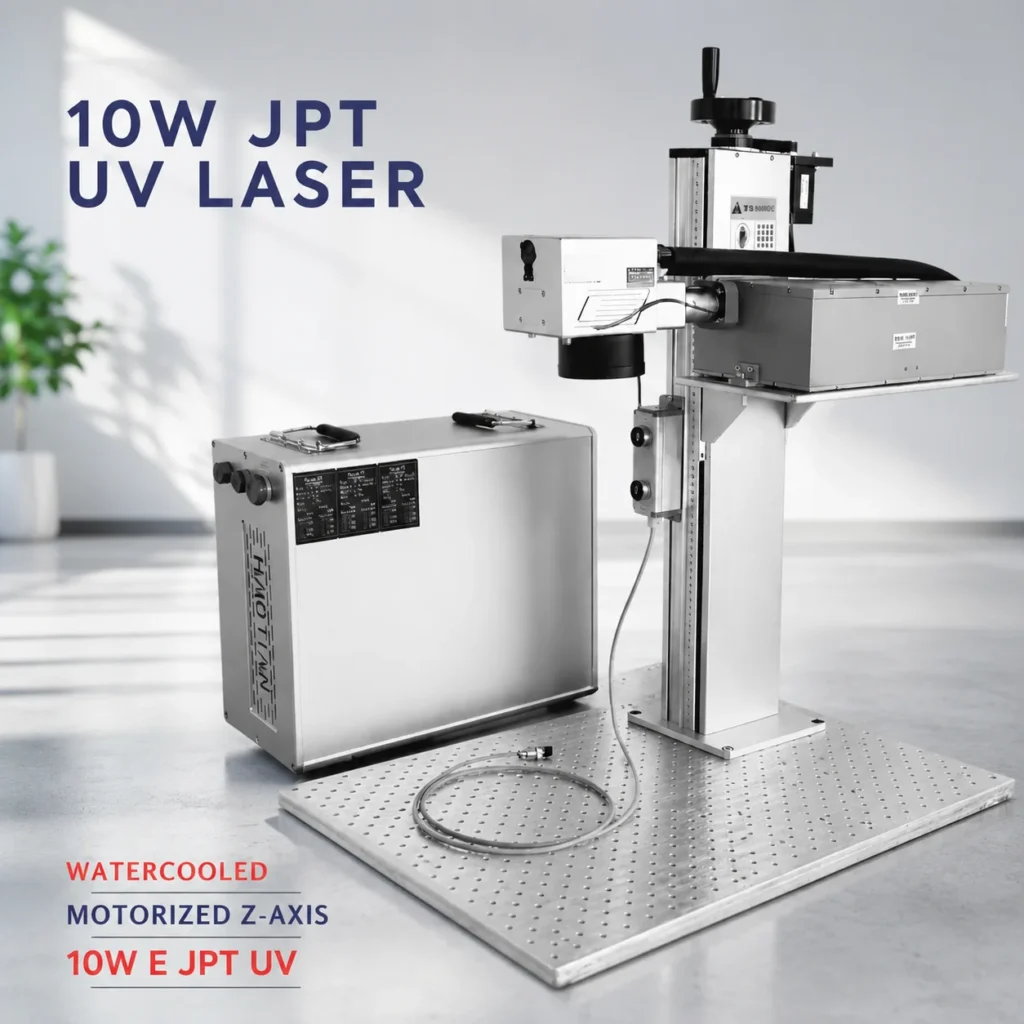
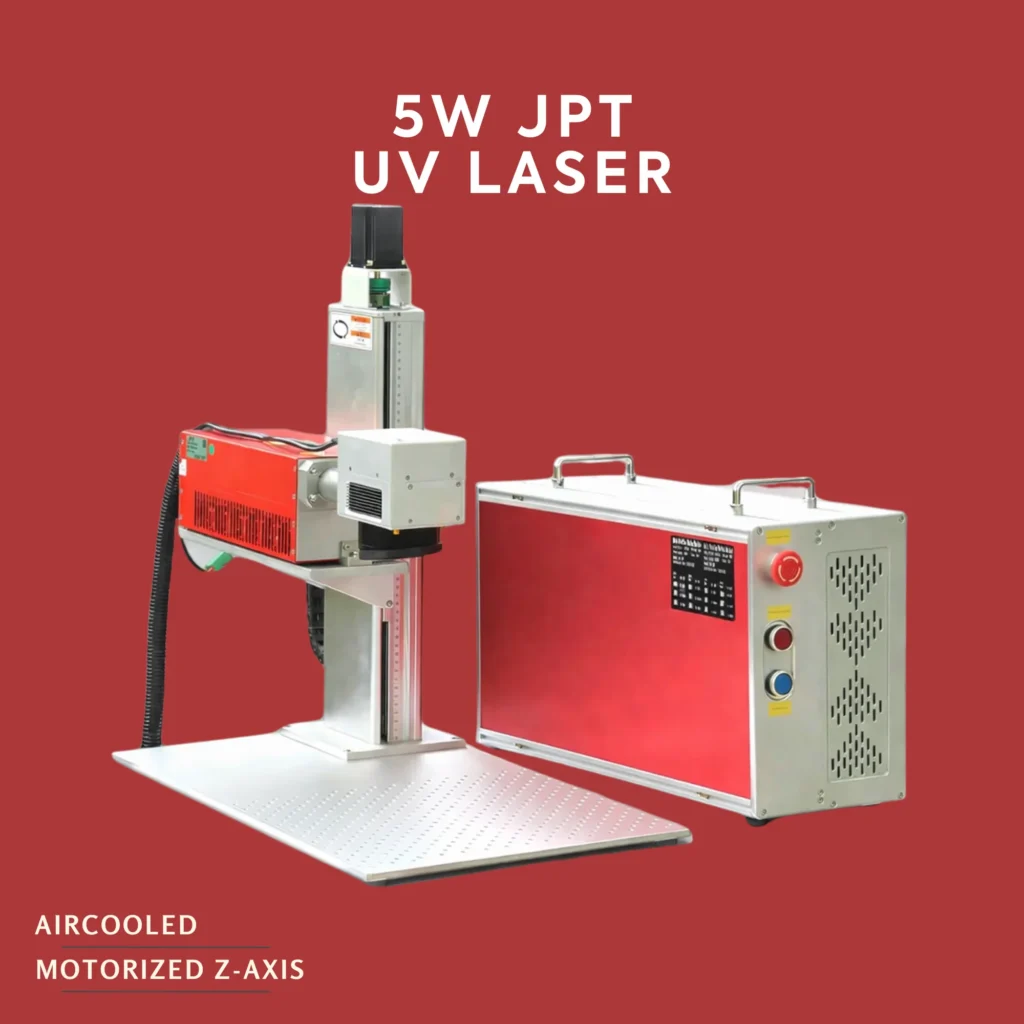
HT-5 5W UV 3D Inner Crystal Marking Machine
The HT-5 is built for one job and built to do it well: rendering detailed three-dimensional images inside solid crystal and glass without ever touching the surface. A 355nm UV laser focuses precisely below the surface, creating microscopic point-cloud structures that form portraits, logos, and 3D models you can see from every angle. For shops selling memorial keepsakes, pet portraits, corporate awards, or personalized gifts, this machine pays for itself in roughly 100 to 150 finished pieces at typical retail margins.
Five Things That Set The HT-5 Apart
1
True Sub-Surface Engraving, Not Surface Marking
The 355nm UV beam passes harmlessly through the outer faces of the crystal and only releases its energy at the focal point inside the material. The result is a clean, smooth exterior with the entire image suspended in the middle of the block.
UV is the right wavelength for this work because its high photon energy interacts with transparent K9 glass far more reliably than fiber or CO2, both of which struggle to deposit energy below the surface without damaging the entry face.
2
Motorized Z-Axis For Accurate Depth Control
3D inner engraving lives or dies on Z-axis precision. Every dot has to land at the exact coordinate the point cloud specifies, or the image goes blurry, hollow, or cracked. The HT-5 uses a motorized Z tower that holds focus through long jobs without manual adjustment.
For point-cloud portraits with thousands of layers, the motorized Z keeps the dot spacing consistent from the front face of the image to the back, which is what gives finished portraits their depth and presence.
3
Water Cooling For Long Production Runs
A typical 3D portrait takes 20 to 35 minutes to engrave, and busy shops chain dozens of jobs in a day. Air-cooled UV lasers struggle with that duty cycle. The HT-5 uses a water-cooled 355nm source that holds output stable across back-to-back runs.
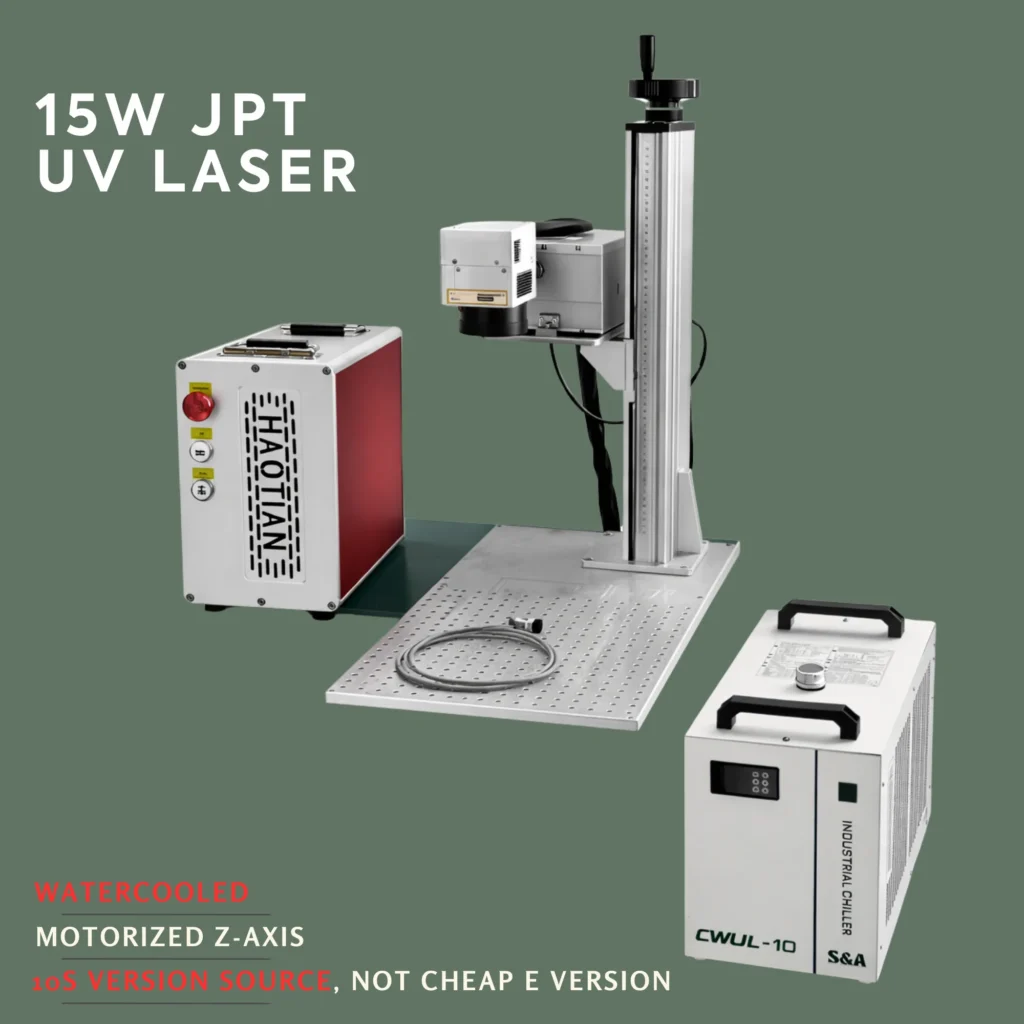
This is the same reason the larger 10W and 15W UV machines in the Haotian range use water cooling. At UV wavelengths, thermal stability is what keeps the dots sharp deep into a long production day.
4
Cold Marking Means No Cracks On The Outer Faces
Because UV is a cold marking process at the surface, the entry face of the crystal stays optically clear after engraving. There are no micro-fractures on the outside of the block, no cloudy entry zones, and no visible laser path leading to the image.
For premium awards and memorial pieces where the buyer expects a flawless presentation, this is the difference between a $30 product and a $70 product.
5
Designed For Point-Cloud And STL Workflows
The HT-5 ships ready to handle both file types most shops actually use: point clouds converted from 2D photographs (the standard for portraits) and geometric STL or OBJ files (for logos, products, and architectural models). The dedicated 3D control software handles slicing, depth correction for the refractive index of K9 glass, and dot density.
You set up the file in the 3D software first, then send it to the machine. Resizing inside the laser control software after slicing causes pixelation, so the workflow is built around getting the dimensions right before engraving begins.
Technical Specifications
| Model | HT-5 |
|---|---|
| Laser type | 355nm UV solid-state |
| Average output power | 5W |
| Cooling | Water cooled (chiller included) |
| Z-axis | Motorized, software controlled |
| Standard work area | 110 x 110 mm (other lens sizes available on request) |
| Repetition frequency | 20 to 100 kHz |
| Beam quality (M²) | Less than 1.3 |
| Compatible materials | K9 optical crystal, borosilicate glass, soda-lime glass |
| Software | Dedicated 3D inner engraving software with point cloud and STL import |
| Power supply | 110V / 220V (specify at order) |
| Total power consumption | Less than 600W |
| Warranty | 18 months full machine, lifetime email support |
What The HT-5 Cannot Do
Honest disclosure matters. The HT-5 does everything a standard 5W UV laser does (surface marking on plastics, PCBs, anodized metal, leather, paper, thin acrylic, and yes, glass surface marking) plus its specialty: 3D sub-surface engraving inside crystal. But there are real jobs it is not the right tool for.
- It does not drill through glass. The HT-5 marks the surface of glass and engraves dots inside crystal, but it cannot drill clean through-holes. Drilling holes through glass requires the JPT M8 fiber laser series with G3 PRO 2.5D galvo and EZCad3.
- It is not fast on metals. 5W of UV will mark stainless and aluminum, but a fiber laser does the same job ten to twenty times faster. If metal marking is your main workflow, choose the 60W EM7 or any M7 fiber laser. Use UV when material variety matters more than speed.
- It does not cut sheet metal. This is a marking and engraving machine, not a sheet cutter. For real sheet metal cutting use the CNC fiber laser line. UV at 5W will cut paper, thin plastics, and similar light materials, but not metal.
- It does not handle oversized crystal blocks. The 110 x 110 mm work area is sized for typical award and keepsake formats. Industrial-scale crystal blocks need a larger UV system.
- It is not built for high-volume general UV surface marking. The HT-5 will absolutely do that work, but if your shop runs full-day production batches of PCBs, medical devices, or coated parts and never touches crystal, the standard S-series 5W, 10W, or 15W UV machines are configured around that workflow instead.
Common Buyer Concerns, Answered Directly
Will the dots crack the crystal?
Not when settings are correct. Cracking happens when speed is too low or power too high for the dot density, and the heat merges the fractures. A 5W UV at 100% power, 350 to 500 mm/s, and 30 to 40 kHz is the standard starting point for K9 and produces clean point clouds without internal fractures.
How do I align the work without seeing inside the crystal?
The control software has a framing and outline feature. Place a plain card on top of the block, run the outline, and the framing laser shows you where the engraving area lands relative to the physical crystal before you start the real job.
How big do the files get?
Point clouds for high-resolution portraits can run 150 MB to 300 MB, sometimes larger. The HT-5 control software handles these file sizes, but workstation RAM and a fast SSD make the slicing step much faster. 16 GB of RAM is the practical minimum.
How long does a typical portrait take to engrave?
Twenty to thirty-five minutes for a standard medium-sized portrait, depending on dot density and image complexity. Larger or denser images push past an hour. This is one machine where production planning around batch runs makes the most sense.
Do I need special crystal, or will any glass work?
Use optical-grade K9 crystal for best results. Lower-quality glass can have a yellow tint, internal bubbles, or inconsistent refractive index, all of which scatter the laser and produce dim or distorted dots. Source K9 from a reliable supplier and clean each block with isopropyl alcohol before engraving.
What does a finished piece sell for?
Retail pricing for custom 3D crystal portraits typically runs $30 to $70 per piece depending on size and complexity. Memorial pieces, pet portraits, and corporate awards sit at the higher end. At those margins, the HT-5 pays back its purchase price in roughly 100 to 150 finished pieces.
What Ships With The HT-5
- HT-5 5W UV laser machine, fully assembled
- Water chiller (matched to laser source)
- Dedicated 3D inner engraving software
- Standard 110 x 110 mm F-theta lens
- UV-rated safety glasses (OD6+)
- Foot pedal switch for hands-free operation
- All cables, USB drive, complete documentation
- Free DDP shipping to US, Canada, EU (free CIF elsewhere)
18-Month Warranty
The HT-5 carries the full Haotian UV warranty. Eighteen months on the complete machine. If any part other than the laser source has a quality issue, we ship a replacement free and cover all related shipping. The broken part stays with you.
If the UV source itself develops a fault during the warranty window, it returns to us for repair. We cover shipping both ways. After the warranty ends, lifetime email support continues at info@haotianlasers.com.
Free DDP Shipping
The HT-5 ships free DDP (Delivered Duty Paid) to the United States, Canada, and the European Union. All duties and import fees are included in the price. Typical delivery window is approximately 30 days from order, including production lead time.
For destinations outside DDP coverage, free CIF worldwide shipping is available with an approximately 12 to 14 day window. The customer handles import duties on CIF orders.
Related Machines
5W UV S-Series
General UV surface marking. PCBs, plastics, anodized metal. Air cooled.
10W UV S-Series
Mid-range UV marking. Higher throughput on heat-sensitive materials.
120W M8 Fiber
For drilling holes through glass rather than marking inside it.
Frequently Asked Questions
Why does inner crystal engraving need UV instead of fiber or CO2?
UV photons at 355nm carry enough energy to interact with transparent materials like K9 crystal, glass, and quartz. Fiber lasers at 1064nm and CO2 lasers at 10.6 microns either pass through clear glass without depositing energy or get absorbed at the surface where they damage the entry face. UV is the only common laser wavelength that can deposit a controlled fracture point below the surface of optical glass without damaging the outside.
Can I make a 3D crystal from a regular smartphone photo?
Yes, with a depth-conversion step. The 2D photo is processed through software that uses AI depth estimation to build a depth map, then converted into a point cloud that the laser can engrave. High-contrast portraits with the background already removed produce the best results. Low-light or low-contrast photos give grainy or hollow-looking finished pieces.
What is a point cloud and why does it matter?
A point cloud is a collection of thousands or millions of individual coordinate points in 3D space. Each point is one fracture dot the laser will create inside the crystal. Point clouds are how 3D inner engraving represents shading and depth: dense areas of points appear bright white when lit from below, sparse areas stay clear and look dark. This is fundamentally different from STL geometric models, which only represent the outer skin of an object.
Why should I not resize the model in the laser control software?
Resizing after the point cloud has been generated changes the spacing between dots without regenerating them. The result looks pixelated because the gaps between dots get larger than the dots themselves. Always set the final crystal dimensions in the 3D conversion software before exporting the point cloud, then load it into the laser control software at 1:1 scale.
What are typical settings for a portrait in K9 crystal?
A common starting point on the HT-5 is 100% power, 350 to 500 mm/s scanning speed, and 30 to 40 kHz frequency. Some imported point cloud files default to 60 kHz, which also works. The exact settings depend on dot density and crystal thickness, so test pieces on scrap blocks are part of dialing in any new design.
Does the laser software adjust for the refractive index of glass?
Yes. K9 crystal has a refractive index of approximately 1.5, which means light bends as it enters the block. The control software compensates for this so that the dots land at the correct depth inside the material rather than where they would land in air. This is why dedicated 3D software is required and a generic laser control program will not produce correct results.
Can the HT-5 engrave inside other transparent materials besides K9?
It can mark borosilicate and soda-lime glass with reduced clarity compared to K9. Quartz also works. Acrylic does not work because the UV wavelength interacts differently with polymers and surface damage becomes likely. K9 optical crystal is the standard because its refractive index is consistent and its absorption properties are well understood for this process.
Do I need a separate computer to run the machine?
Yes. Use a Windows workstation with at least 16 GB of RAM, an SSD for fast file loading, and a USB 2.0 or higher port for the laser connection. Point cloud files can be large (300 MB is not unusual) and slicing them on a slow machine adds significant setup time per job. The control software is Windows-only.
Ready To Add 3D Crystal Engraving To Your Shop?
Email info@haotianlasers.com with questions, sample requests, or to confirm your shipping window. Haotian Laser, 6191 Sherman Rd, Saginaw, MI 48604.
Email info@haotianlasers.com