

⚡ 5W UV at 355nm
❄️ Cold Marking Process
🛡️ 18-Month Warranty
🌬️ Air Cooled
Free DDPUS, Canada, EU
Up to 300mmLens Options
18 MonthsWarranty
JPT LarkSource
Free GiftsRotary + Glasses
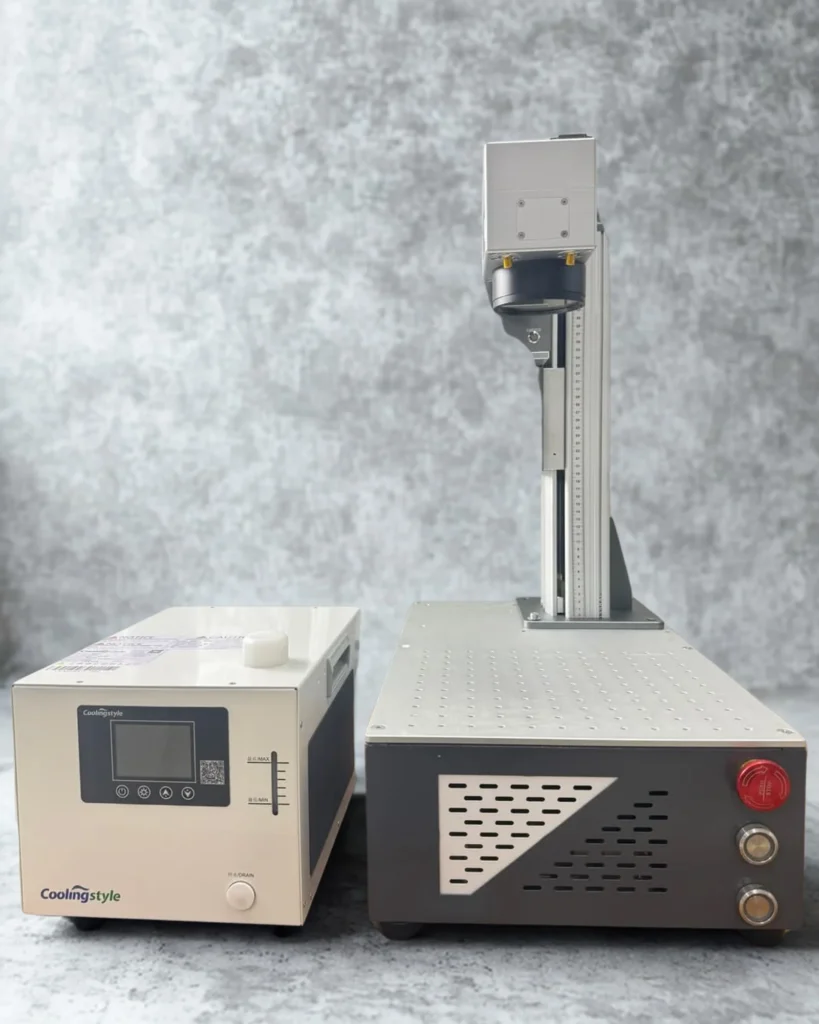
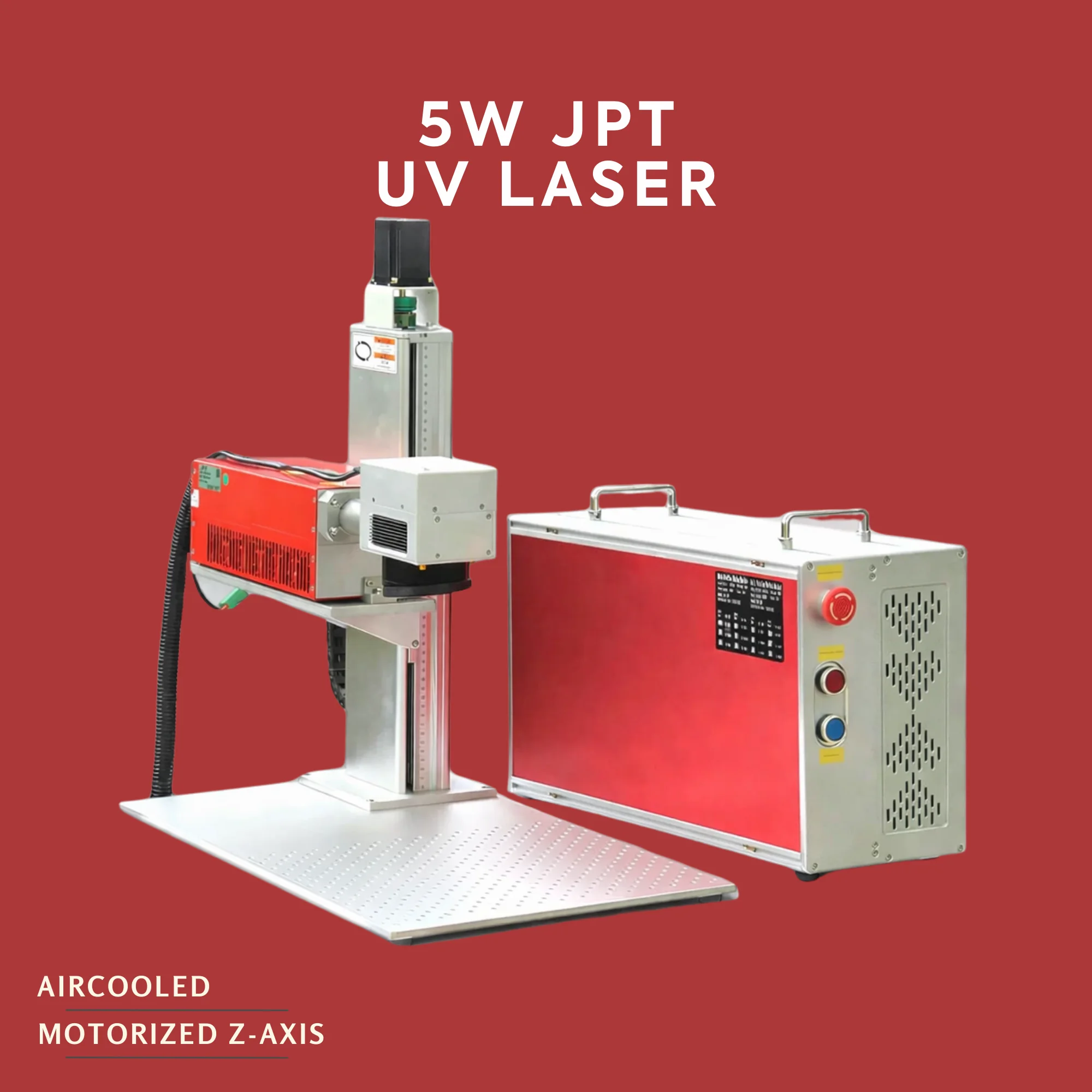
5W UV Laser Marking Machine (JPT Lark-355-5A) Cold laser precision for glass, crystal, and heat-sensitive materials
The specialist machine for materials fiber and CO2 cannot handle cleanly. At 355nm, this UV laser ablates rather than burns, producing sandblasted-quality glass marks up to 130 x 130 mm, clean silicone engraving, and crisp work on plastics that would melt under any thermal laser. Air cooled, no chiller required, built on the JPT Lark-355-5A source. If glass, crystal, electronics, or heat-sensitive materials are in your workflow, this is the right tool.
Five Reasons This Machine Exists
1
355nm wavelength - the cold laser
Where fiber (1064nm) and CO2 (10,600nm) rely on heat to vaporize material, the Lark-355-5A uses a photochemical reaction. Molecules absorb the ultraviolet energy and detach from the surface. The heat-affected zone is negligible, which is why this wavelength is the right tool for work that cannot tolerate thermal damage.
2
Glass and crystal marking without micro-fractures
A CO2 laser creates a network of tiny cracks on the glass surface that look like an etch from a distance. The UV laser actually ablates glass material away, producing a finish closer to professional sandblasting or acid etching. Cleaner edges, no chipping, no frosted overspray on surrounding areas. Works on soda lime, borosilicate, and quartz glass.
3
Clean work on plastics fiber cannot mark
Clear acrylics, silicones, and colored polymers that fiber lasers either pass through or melt are straightforward for UV. Marking is high-contrast and the surface stays undamaged. This is the laser for medical device labeling, electronics enclosures, and cosmetic packaging where the material cannot show any heat stress.
4
Air cooled - no chiller, no plumbing
The 5W Lark runs on air cooling only. No water chiller to maintain, no hoses to route, no leak risk. The machine is plug-and-work on standard 110V power. Compare to the 10W, 15W, and 20W S-series models which require water cooling at higher powers. If your throughput fits 5W, the air-cooled version saves bench space and recurring maintenance.
5
Glass marking clean up to 130 mm field size
At 5W, the energy density stays high enough to produce clean ablated glass marks up to a 130 x 130 mm field. Beyond that size, the beam spreads across too much area per pulse and glass results start to degrade. For glass work larger than 130mm, step up to the 10W or 15W S-series. The machine itself accepts the full range of Haotian lens options up to 300 x 300 mm for non-glass work on plastics, leather, and other materials where lower energy density per pulse is not a problem.
Technical Specifications
| Laser Source | JPT Lark-355-5A |
|---|---|
| Wavelength | 355 nm (ultraviolet) |
| Average Output Power | 5 W |
| Cooling | Air cooled (no chiller required) |
| Standard Lens | 110 x 110 mm (upgradeable up to 300 x 300 mm) |
| Glass Marking Effective Limit | Up to 130 x 130 mm (larger fields on glass need 10W or higher) |
| Marking Speed | Up to 7000 mm/s |
| Repetition Frequency | 20 - 200 kHz |
| Beam Quality M² | Less than 1.3 |
| Positioning Accuracy | ±0.002 mm |
| Minimum Line Width | 0.01 mm |
| Minimum Character Height | 0.15 mm |
| Power Supply | 110V / 220V, 50/60 Hz |
| Total Power Consumption | Less than 500 W |
| Galvo Scanner | Digital, high-speed |
| Software | EZCad 2 (LightBurn compatible) |
| Operating Temperature | 15°C to 35°C |
Buyer Concerns Answered Directly
Will 5W be enough power for my glass work?
For glass pieces that fit within a 130 x 130 mm field, yes, 5W produces clean ablated marks at practical speed. Beyond 130mm on glass specifically, the energy density drops and mark quality degrades. Step up to the 10W or 15W S-series for larger glass work. For non-glass materials (plastics, leather, PCBs, metals for surface marking), 5W handles larger fields without the same limit.
How does UV compare to CO2 for glass?
CO2 marks glass by creating micro-fractures, which look like an etch but are actually a damaged surface. UV ablates the material, which produces a cleaner and more precise result, similar to sandblasting. For decorative glass, awards, and luxury pieces, UV is the better finish.
Can it mark metals for jewelry work?
Yes, surface marking on gold, silver, stainless steel, and brass works well because UV does not damage the underlying metal. For deep engraving on metal, a 60W or 100W fiber laser remains the right tool. Use UV for jewelry pieces where heat could affect stones or delicate settings.
Is a water chiller required?
No. The 5W Lark source runs on air cooling. Higher power UV machines (10W, 15W, 20W) require water chillers because of the heat load, but at 5W the laser operates comfortably on ambient air. Less maintenance, no water hoses, smaller footprint.
What about food-safe marking?
Because the process is photochemical and does not involve high heat or combustion, UV is suitable for direct marking on hard candy, pill coatings, and food-contact packaging. Verify with your local food safety regulator that the specific material and marking application meets your jurisdiction's requirements.
Can I use LightBurn with it?
The machine ships with EZCad 2, which is included and configured. LightBurn is compatible and widely used with EZCad-based galvo systems. Most buyers run EZCad for production work and LightBurn for design flexibility.
What this machine cannot do
- Deep engrave metals. At 5W UV, metal marks are surface-level only. For deep engraving on stainless or brass, step up to a 60W or 100W fiber laser.
- Cut metal sheets. UV galvo lasers are markers, not cutters. For cutting use a CNC fiber laser cutter.
- Drill glass. Marking and ablating the surface works well, but drilling through glass requires the JPT M8 series fiber laser with G3 PRO 2.5D galvo and EZCad3.
- Clean glass marking beyond 130 x 130 mm. At 5W the energy density drops below what glass needs for clean ablation at larger field sizes. Step up to 10W or 15W S-series for larger glass work. Non-glass materials are not affected by this limit.
- Cut PVC, vinyl, or materials that release toxic gases. No laser should do this. Chlorinated materials damage optics and harm operators.
UV vs Fiber vs CO2 - Which Wavelength For Which Job
| UV 5W (this machine) | Fiber 60W EM7 | CO2 Galvo 60W | |
|---|---|---|---|
| Wavelength | 355 nm | 1064 nm | 10,600 nm |
| Process | Cold photochemical | Thermal | Thermal |
| Heat-affected zone | Negligible | High | Moderate to high |
| Glass marking quality | Smooth ablation | Not recommended | Micro-fractured |
| Silicone and soft plastics | Excellent | Limited | Melts often |
| Clear acrylic marking | Yes | No (passes through) | Yes |
| Deep metal engraving | Surface only | Excellent | No |
| Tumblers and coated cups | Not ideal | No | Excellent |
| Wood marking detail | Very high (no char) | No | High (some char) |
| Cooling method | Air | Air | Water or air |
What Ships With The Machine
- 5W UV laser marking machine with JPT Lark-355-5A source
- Rotary attachment (D60, D80, or D100 - your choice at order)
- UV-rated safety glasses (OD6+ protection)
- EZCad 2 software, pre-configured for the Lark-355-5A
- LightBurn compatibility out of the box
- Foot pedal for hands-free operation
- Complete cable set and USB drive with drivers
- Printed quick-start guide and full documentation
- Lifetime email support at info@haotianlasers.com
Frequently Asked Questions
Why choose UV over fiber or CO2 for glass?
UV ablates glass material through a photochemical process, while CO2 creates surface micro-fractures that look etched but are actually cracked glass. The UV finish is smoother, cleaner, and does not risk chipping at edges. For crystal, decorative glass, and luxury pieces, UV produces the result customers expect from professional engraving. Fiber lasers are poorly suited to glass at any power.
Is the Lark-355-5A the same as cheaper UV sources on the market?
No. JPT is one of the leading industrial UV laser source manufacturers, and the Lark series is their current production-grade line. The 5A specifically is the air-cooled 5W variant. Cheaper UV sources from unbranded Chinese manufacturers typically cut corners on beam quality, stability, and lifetime. JPT sources are what the industry uses for serious production.
How long does the UV laser source last?
Industrial UV sources like the Lark are rated for tens of thousands of hours of operational lifetime under normal use. Actual lifetime depends on duty cycle, ambient temperature, and maintenance. The 18-month warranty covers source defects during that period. For continuous 24/7 production you should budget for source replacement as a planned maintenance item, same as any laser technology.
What is the difference between the 5W, 10W, 15W, and 20W UV machines?
The 5W (Lark-355-5A) is air cooled and uses the Lark source. The 10W, 15W, and 20W all use the JPT S-series sources and require water cooling because of higher heat loads. Higher power means faster marking speed across all materials and, specifically for glass, the ability to maintain clean ablated marks at larger field sizes. At 5W, clean glass marking is effective up to roughly 130 x 130 mm. For larger glass pieces or higher production throughput, the 10W or 15W is the right step up. For non-glass materials, 5W remains capable at larger field sizes.
Can I use this for PCB and electronics marking?
Yes. UV is the preferred technology for marking PCBs, electronic components, and heat-sensitive assemblies because it does not damage adjacent solder joints, ICs, or substrate materials. Many medical device and electronics manufacturers specify UV marking for exactly this reason.
Does it work with LightBurn software?
The machine ships with EZCad 2, which is the standard software for galvo-based laser systems and comes pre-configured. LightBurn is fully compatible with EZCad-driven galvo hardware. Many users run both: EZCad for production jobs with saved parameter presets, LightBurn when they want the more flexible design environment.
What is included in the 18-month warranty?
The warranty covers the complete machine including the laser source for 18 months from delivery. Non-source parts that fail are replaced at no cost and the broken part stays with you (no return required). Source defects require a return for JPT manufacturer warranty processing, and Haotian covers shipping both ways. Email support continues for the lifetime of the machine at info@haotianlasers.com.
How long does shipping take and are there duties?
Free DDP shipping to the US, Canada, and EU takes approximately 30 days from order confirmation. DDP means Delivered Duty Paid, so all customs duties and import taxes are included. For other destinations, free CIF shipping is available and typically arrives in about 12 days, but the customer is responsible for local duties.
Warranty Coverage
Every 5W UV laser includes an 18-month warranty on the complete machine and the JPT Lark source. Non-source parts that fail within the warranty window are replaced free of charge and the broken parts do not need to be returned. Laser source defects are covered by JPT's manufacturer warranty, and Haotian coordinates the return process at no cost to the buyer. Lifetime email support is available at info@haotianlasers.com after the warranty period ends.
Delivery and Shipping
Free DDP (Delivered Duty Paid) shipping to the US, Canada, and EU. All customs duties and import taxes are included in the price, so there are no surprise fees at delivery. Typical lead time is approximately 30 days from order confirmation, which includes build-to-order production at the Liaocheng factory and transit to the destination country. Worldwide CIF shipping is also available at no additional cost and typically arrives in about 12 days, though local duties are the buyer's responsibility in those cases.
Related Machines
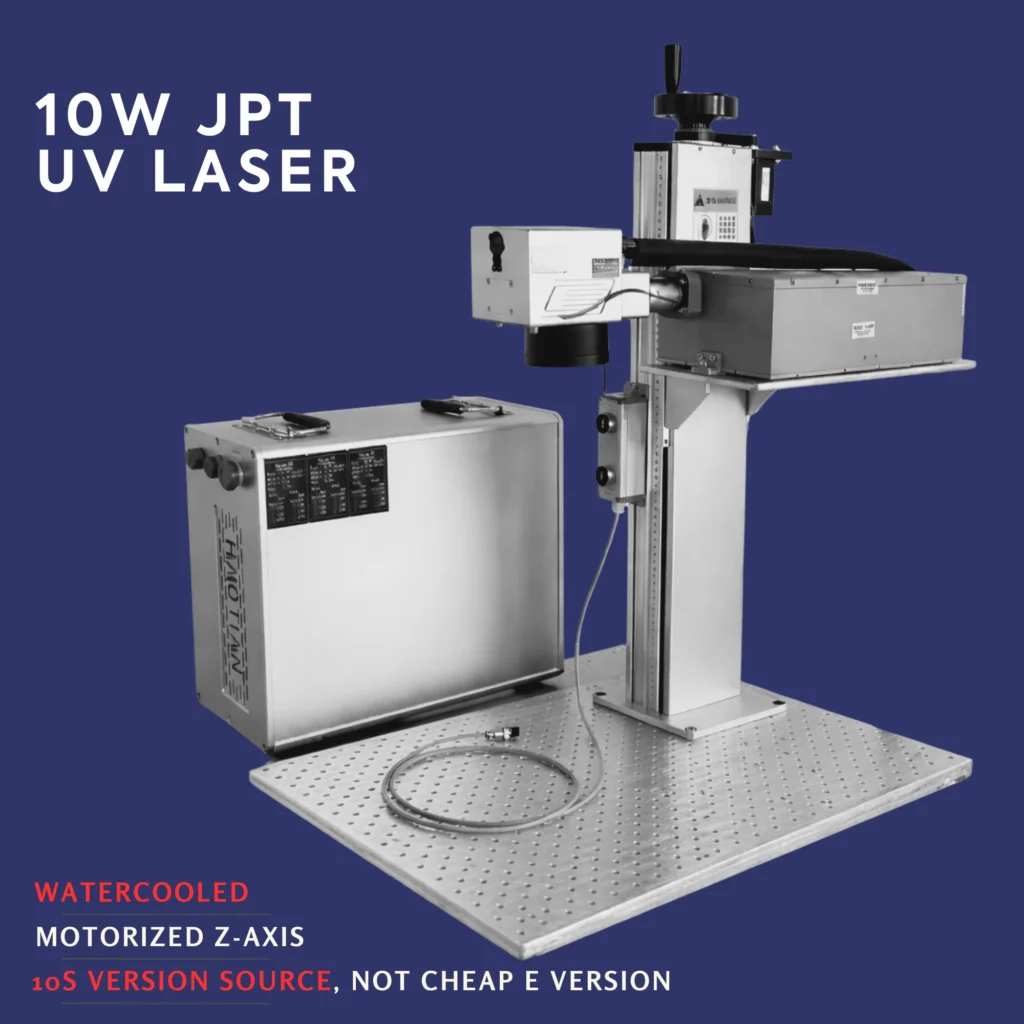
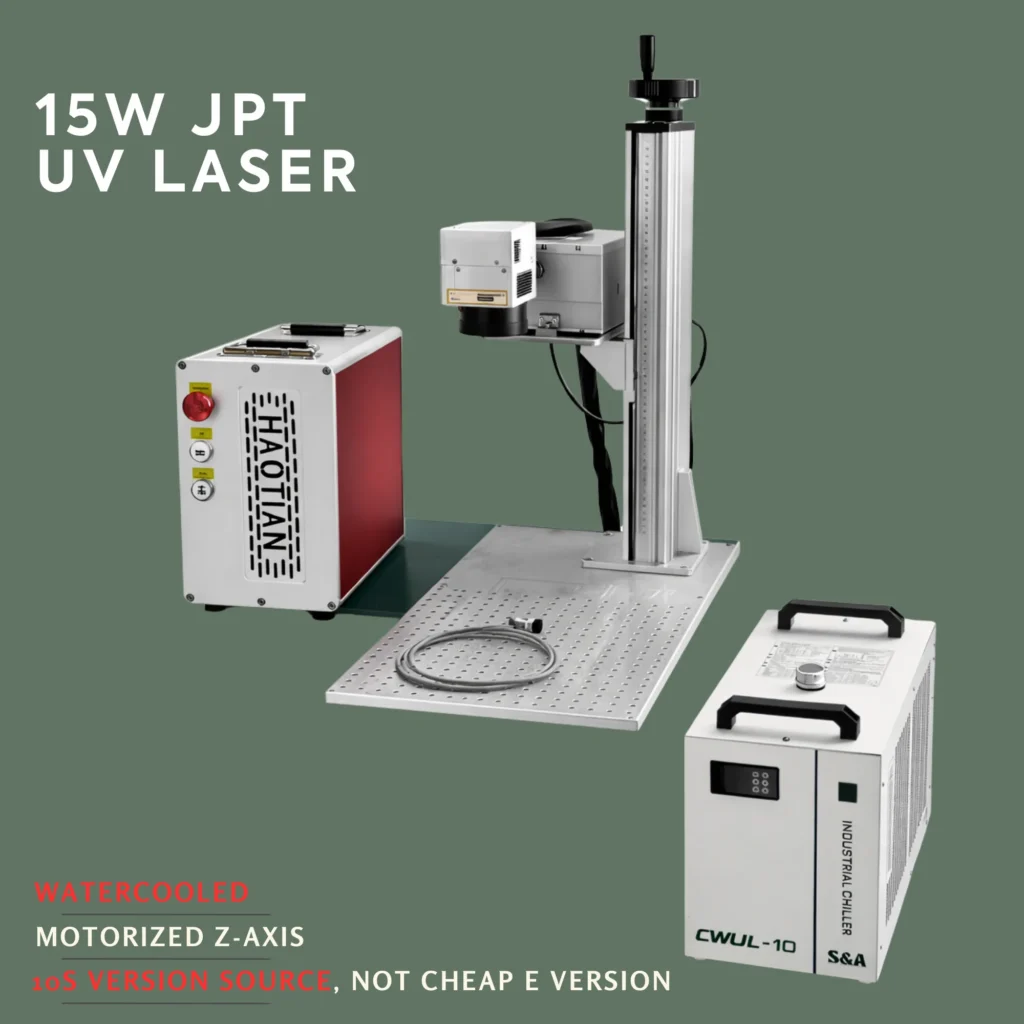
10W / 15W / 20W UV
Water-cooled S-series UV for production volume and larger workpieces
60W EM7 Fiber (Best Seller)
The right tool for deep metal engraving and MOPA color marking at $4,400
CO2 Galvo
For tumblers, coated drinkware, wood, and leather at high speed
Questions Before You Order?
Get a personal recommendation from the Haotian team. We will tell you honestly whether 5W UV is the right fit for your specific materials and production volume, or whether a different machine in the lineup would serve you better.
info@haotianlasers.comHaotian Laser · 6191 Sherman Rd, Saginaw, MI 48604 · United States