
What Is a Fiber Laser? How It Works, What It Engraves and What It Costs

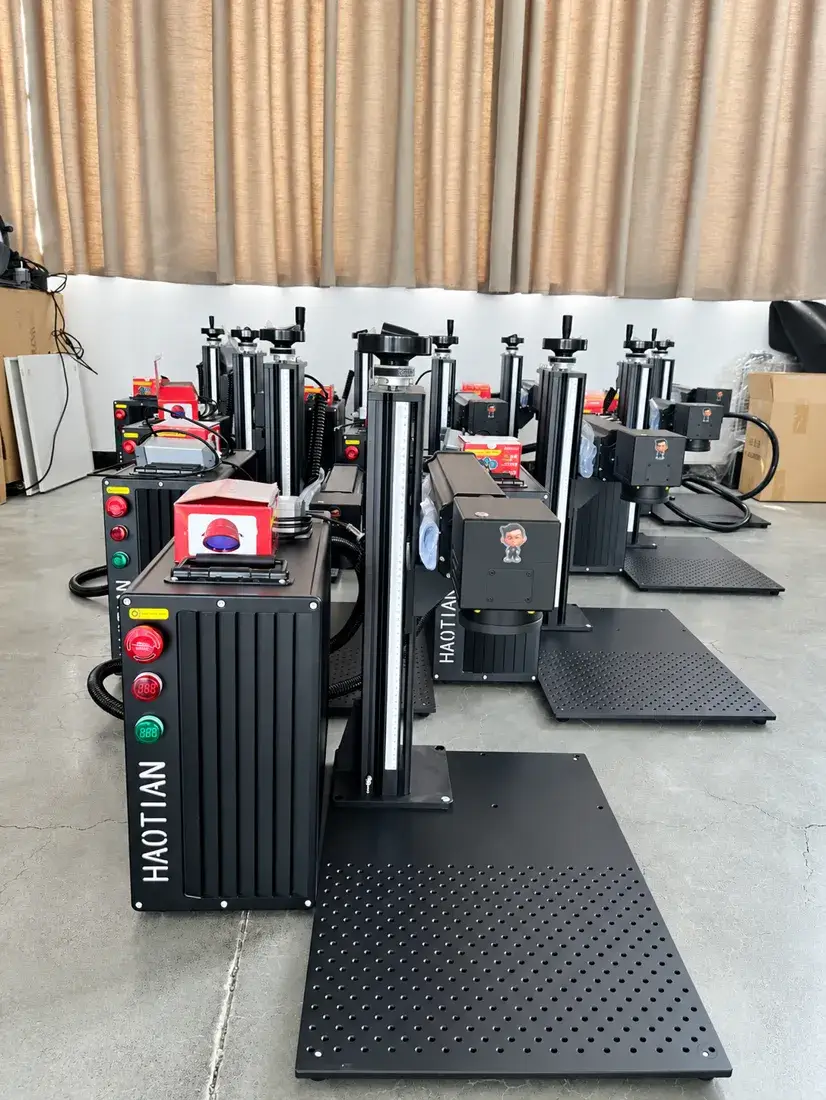
A fiber laser is a marking and engraving machine that generates its beam inside a flexible optical fiber doped with the rare earth element ytterbium. The 1064 nm infrared beam it produces is absorbed extremely well by metal, which is why fiber lasers are the industry standard for permanent engraving on stainless steel, aluminum, brass, copper, titanium, gold and silver. A modern fiber laser marking machine has no consumables, needs almost no maintenance and the laser source is built for up to 100,000 working hours.
This guide explains how a fiber laser works, what it can engrave, the difference between Q-switched and MOPA sources, how much power you need and what a complete machine costs. Everything below comes from our own factory experience building fiber lasers and from the official JPT source manuals you can download on our site.
In this guideHow it worksFiber vs CO2 vs UVQ-switched vs MOPAWhat it engravesPower levelsLifespanCostFAQ
How a Fiber Laser Works
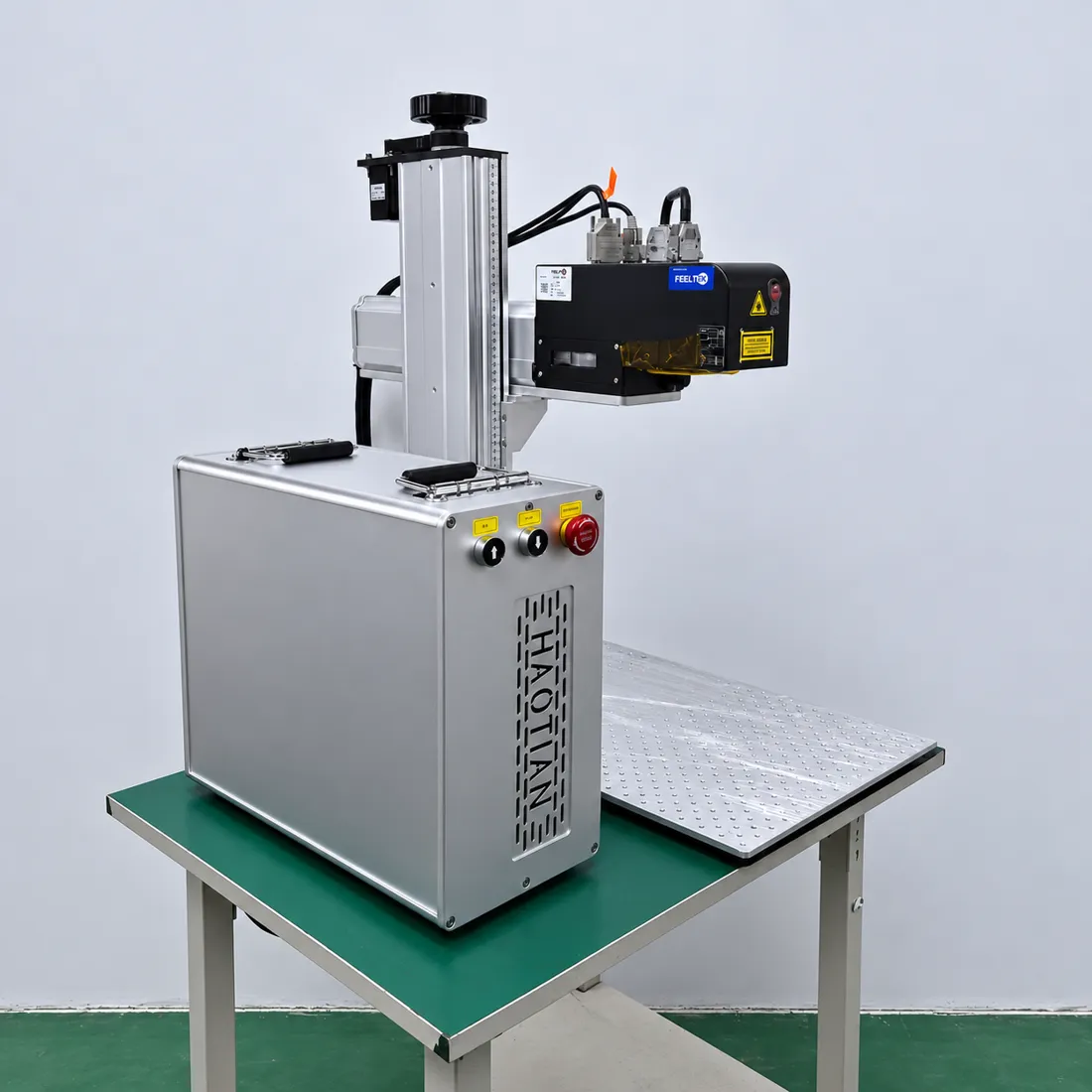
Every pulsed fiber laser has three main stages. A small seed laser diode creates a weak pulse of infrared light. That pulse travels through a coil of ytterbium doped optical fiber, where pump diodes feed energy into the fiber and amplify the pulse thousands of times. This design is called MOPA, short for Master Oscillator Power Amplifier, and it is why fiber sources are so stable: the beam is born and amplified inside glass fiber, with no mirrors to knock out of alignment.

The amplified beam enters a galvo scanning head, where two small mirrors steer it across the workpiece at speeds of several meters per second. An F-theta lens keeps the beam focused across a flat working area, typically 110 x 110 mm to 300 x 300 mm. Because only the mirrors move, a galvo fiber laser marks far faster than any gantry machine of similar price. The pulses are short, between 2 and 500 nanoseconds, with peak power in the kilowatt range: each pulse vaporizes a microscopic layer of metal.
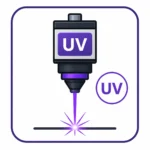
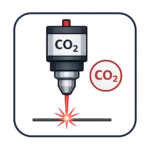
Fiber vs CO2 vs UV Laser
The three laser types are not competitors. They have different wavelengths, so they work on different materials.
| Fiber laser | CO2 laser | UV laser | |
|---|---|---|---|
| Wavelength | 1064 nm infrared | 10,600 nm far infrared | 355 nm ultraviolet |
| Best materials | All metals, coatings, slate, dark acrylic and many plastics | Wood, leather, acrylic, glass surface, rubber | Glass, plastics, PCBs, ceramics |
| Marking type | Engraving, annealing, color marking, deep 3D relief | Cutting and engraving organics | Cold marking with zero heat damage |
| Source lifetime | Up to 100,000 hours | Glass tubes 1 to 2 years, RF metal tubes far longer | 20,000 to 30,000 hours |
| Typical buyer | Metal engraving, jewelry, firearms, industrial parts | Sign makers, woodworkers, leather shops | Electronics, medical, glassware |
If you mostly mark metal, a fiber laser is the right machine. For wood and leather look at a CO2 laser, and for glass or heat sensitive plastics a UV laser marking machine. Still unsure? Our Find Your Laser guide matches machines to materials.
Q-Switched vs MOPA Fiber Laser
Inside the fiber laser family there are two source designs. A Q-switched source, like the Raycus units in our budget machines, fires at a fixed pulse width. It is reliable and the most affordable way into deep metal engraving. A MOPA source lets you adjust pulse width and frequency independently, usually from 2 to 500 ns and from 1 kHz up to 4 MHz.
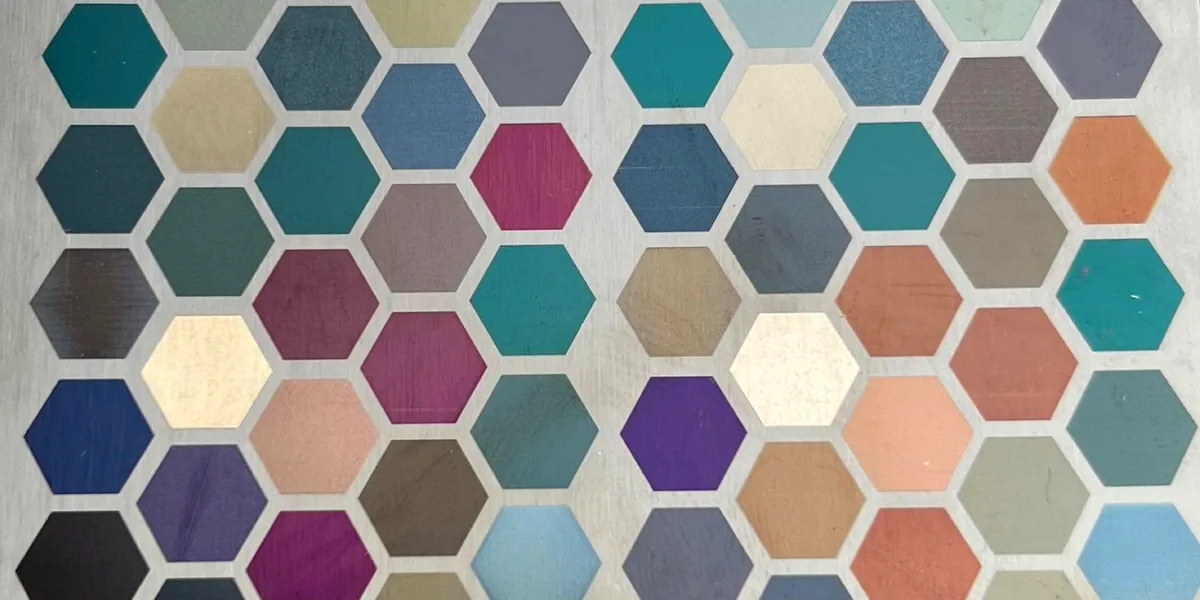
That control is what unlocks color marking on stainless steel and titanium: short pulses at the right frequency grow a controlled oxide layer that reflects blues, golds, purples and reds without any ink or coating. All JPT sources we build with, from the 60W EM7 in our best seller to the 350W M7 flagship, are MOPA designs.
What Can a Fiber Laser Engrave
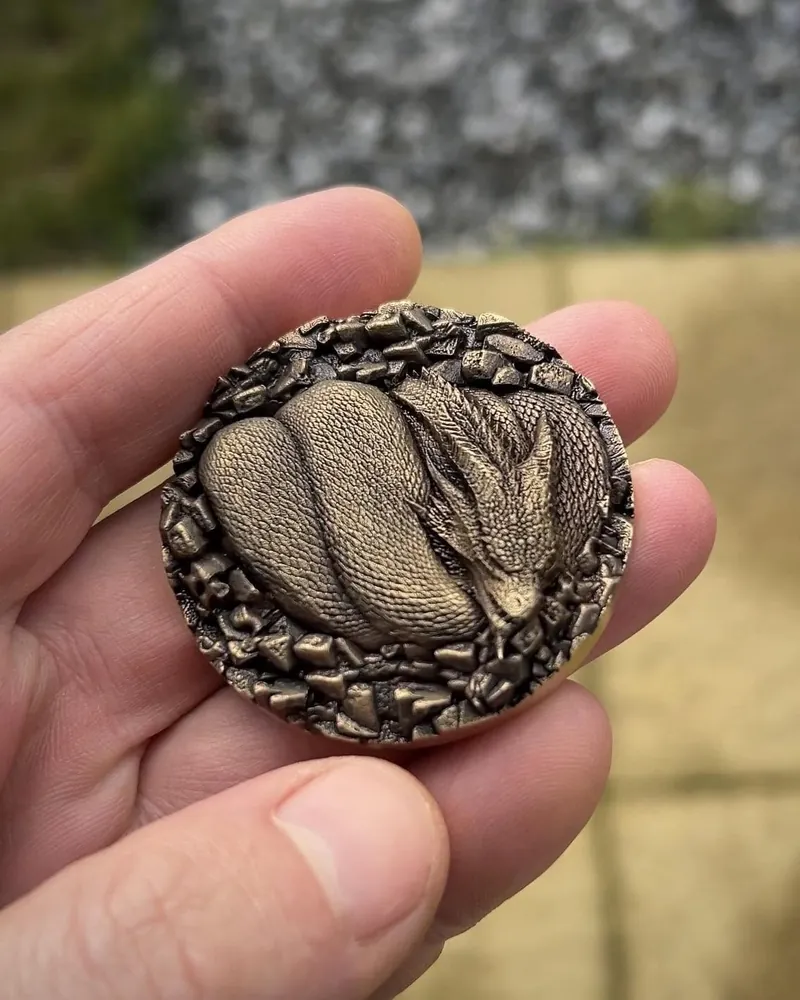
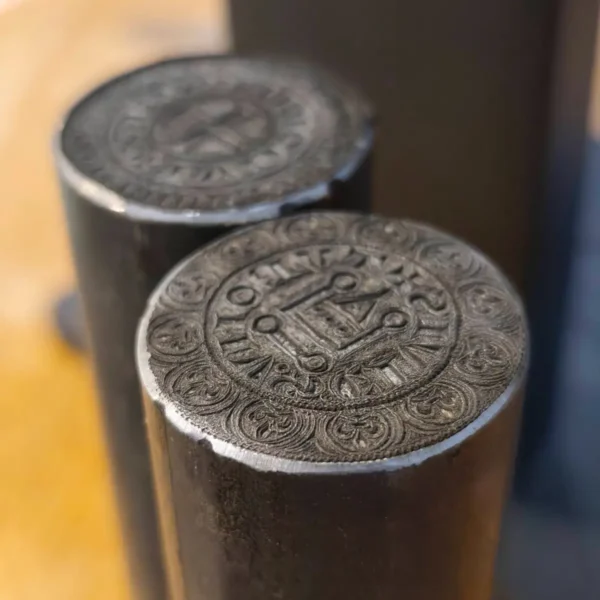
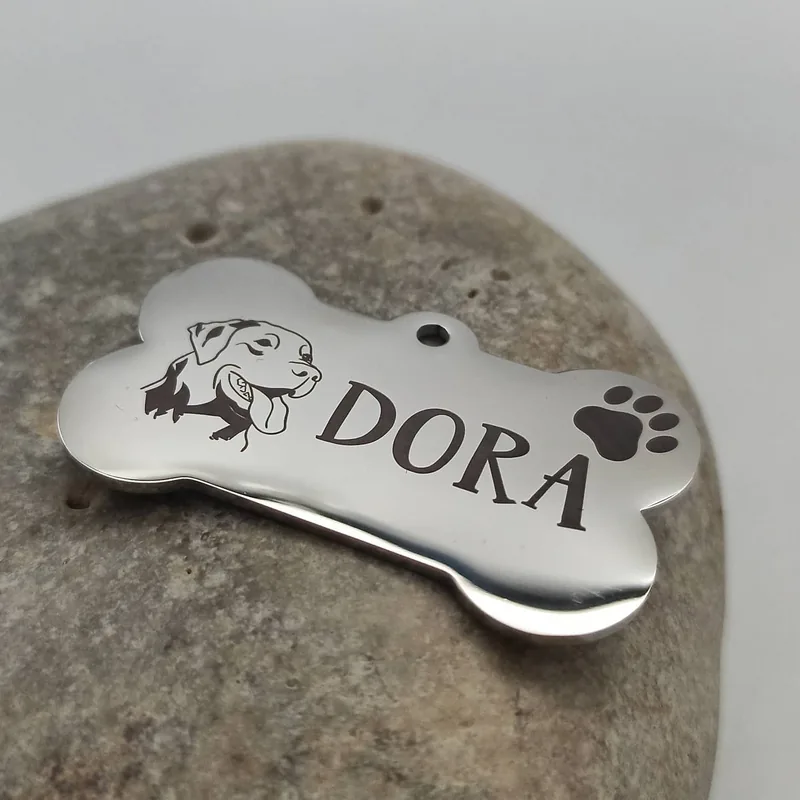
Stainless steel, carbon steel, tool steel, tungsten carbide, aluminum, anodized aluminum, brass, copper, titanium, gold, silver and most alloys all engrave beautifully, and plated finishes such as nickel and chrome mark just like their coating. Typical work includes serial plates, VIN tags, medical UDI codes and industrial part marking, jewelry engraving on rings and pendants, firearm engraving, deep stamps and coin dies, tumblers, knives and custom pet ID tags, and with 2.5D and 3D galvo heads even relief sculptures in brass and steel.
Coated metal is one of the most profitable niches of all. The beam vaporizes powder coat and paint with pinpoint precision and exposes bright metal underneath, which is why personalized powder coated tumblers and bottles sell so well. Beyond metal, the 1064 nm wavelength also produces striking high contrast engraving on slate and stone, marks glazed ceramic at low power, cuts crisp rubber stamps and even engraves carbon fiber when fume extraction is running.
Plastics depend on pigment. Black and dark acrylic absorb the 1064 nm beam and engrave beautifully, with a crisp frosted mark that is popular for signs and logo plates, and many engineering plastics such as ABS, polycarbonate and nylon mark well too, though ABS gives off strong fumes, so keep the extractor running. Clear acrylic is the opposite: the infrared beam passes straight through it, so a fiber laser cannot mark or cut it. Cutting acrylic of any color is a job for a CO2 laser, as are wood, leather, paper, fabric and clear glass. Raw wood and untreated leather barely absorb 1064 nm light, so they scorch instead of engraving cleanly, while lacquered wood and finished leather can take an acceptable mark.
One material must never go under any laser: PVC and vinyl, including faux leather, vinyl banner stock and PVC foam board. Heated PVC releases chlorine gas that corrodes the machine and damages your lungs. Treat unknown plastics and galvanized zinc coatings with the same caution and always run fume extraction.
How Much Power Do You Need
20 to 30WLogos, serial numbers and jewelry personalization at the lowest cost of entry.
50 to 60WThe small business sweet spot: fast marking plus real deep engraving. Our best sellers.
80 to 120WHalves production times for deep engraving shops and busy workshops.
200 to 350WIndustrial deep 3D relief, coin dies and full shift production. Water cooled M8 adds glass drilling.
If you are between two sizes, take the larger one: engraving time drops almost linearly with power, and the price difference is usually recovered within months of real work. The water cooled M8 series from 100W up also drills glass, which no other fiber laser class does.
How Long Does a Fiber Laser Last
JPT and Raycus rate their pump diodes for up to 100,000 working hours. At 8 hours a day, 5 days a week, that is several decades of use, which is why the source almost never defines the life of the machine. There are no tubes to replace and no gas to refill. Maintenance is limited to keeping the lens clean and the air intakes free of dust. Our fiber machines carry a 2 or 3 year warranty depending on the source, with lifetime email support after that.
How Much Does a Fiber Laser Cost
Complete fiber laser marking machines run from around $2,500 for entry level 20W units to well over $20,000 for industrial systems. As a factory selling direct, our range starts near the bottom of that scale: a 20W JPT M8 at $3,300, the 60W E2 at $4,100, and water cooled glass drilling machines like the 100W M8 at $10,200. Every machine ships free with duties paid to the US, Canada and EU, with a rotary attachment, safety glasses and F-theta lenses included.
Frequently Asked Questions
Is a fiber laser better than a CO2 laser?
For metal, yes, by a wide margin. For wood, leather and acrylic, a CO2 laser is better. They are different tools for different materials.
Can a fiber laser engrave powder coated tumblers?
Yes, and it is one of the best tools for the job. The beam removes the coating cleanly and reveals the stainless steel underneath, with no weeding and no inks. A rotary attachment keeps the artwork straight all the way around the cup.
Can a fiber laser engrave in color?
A MOPA fiber laser can mark a full spectrum of colors on stainless steel and titanium by growing controlled oxide layers. Q-switched sources cannot.
Can a fiber laser cut metal?
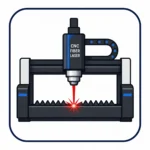
A galvo marking machine cuts thin sheet up to roughly 1 to 2 mm and engraves to any depth in passes. For structural sheet cutting you want a CNC fiber laser cutter with 1500W or more.
Is a fiber laser safe?
Fiber lasers are Class 4 devices. The 1064 nm beam is invisible and reflects off metal, so OD4+ safety glasses are mandatory and ship free with every Haotian machine.
What software does a fiber laser use?
Most machines run EZCAD2 or EZCAD3, and our 2D machines are also LightBurn compatible. You can download the EZCAD2 manual here.
See Fiber Lasers Built in Our Factory
Every Haotian fiber laser is built to order with a genuine JPT or Raycus source, tested in our factory and shipped free worldwide with duties paid.
Nice web site. I ordered my laser engraver through Maker’s Chest for the Haotian 80W Fiber laser JPT. I hope it is ok to sign into your website. I may find something else I will like! I am still waiting on the unit to arrive and I’m very excited to start using it!
Thank you,
David Schnell
dave@CO2Engraving.com
Hi David,
Thank you for your kind words and for choosing Haotian Lasers!
Of course, you’re more than welcome to register on our website, explore our products, and contact us anytime.
The 80W JPT fiber laser is an excellent machine, and I’m sure you’ll enjoy working with it!
If you ever need accessories, spare parts, or technical assistance, feel free to reach out. We’re always happy to help.
Hope your new laser arrives soon!
Best regards,
Enadin