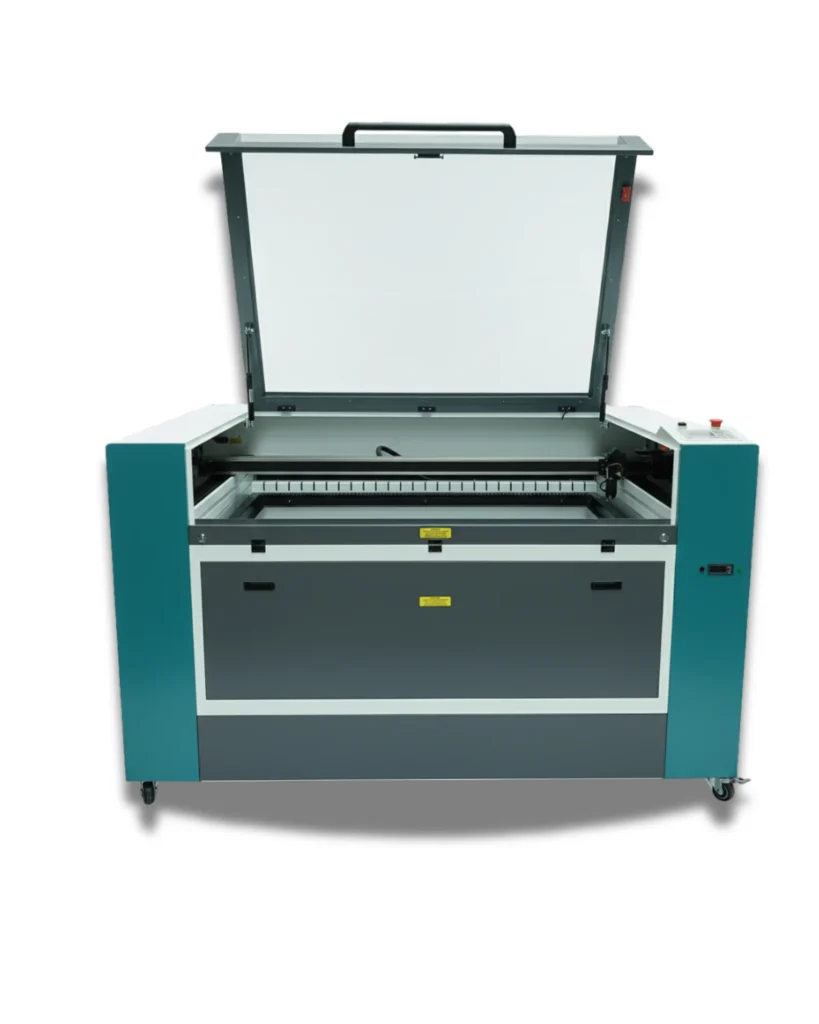
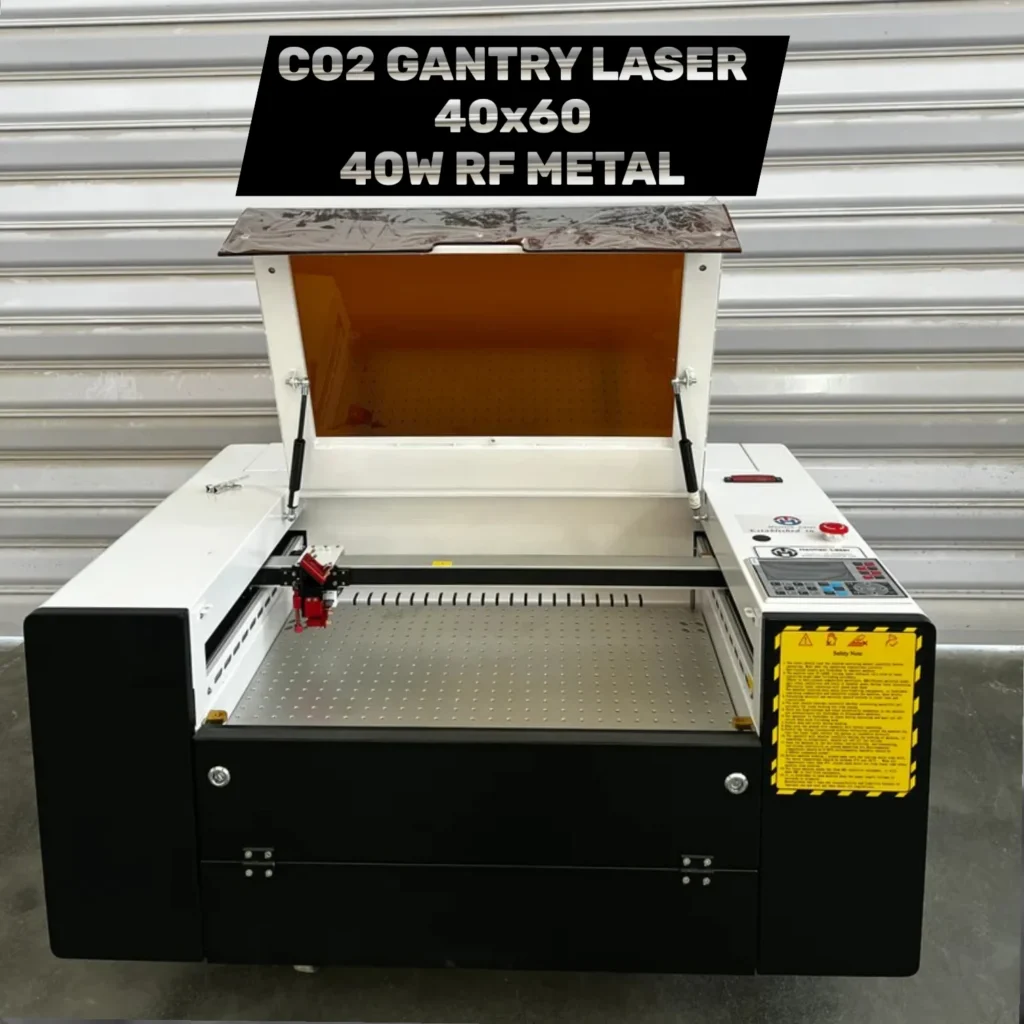
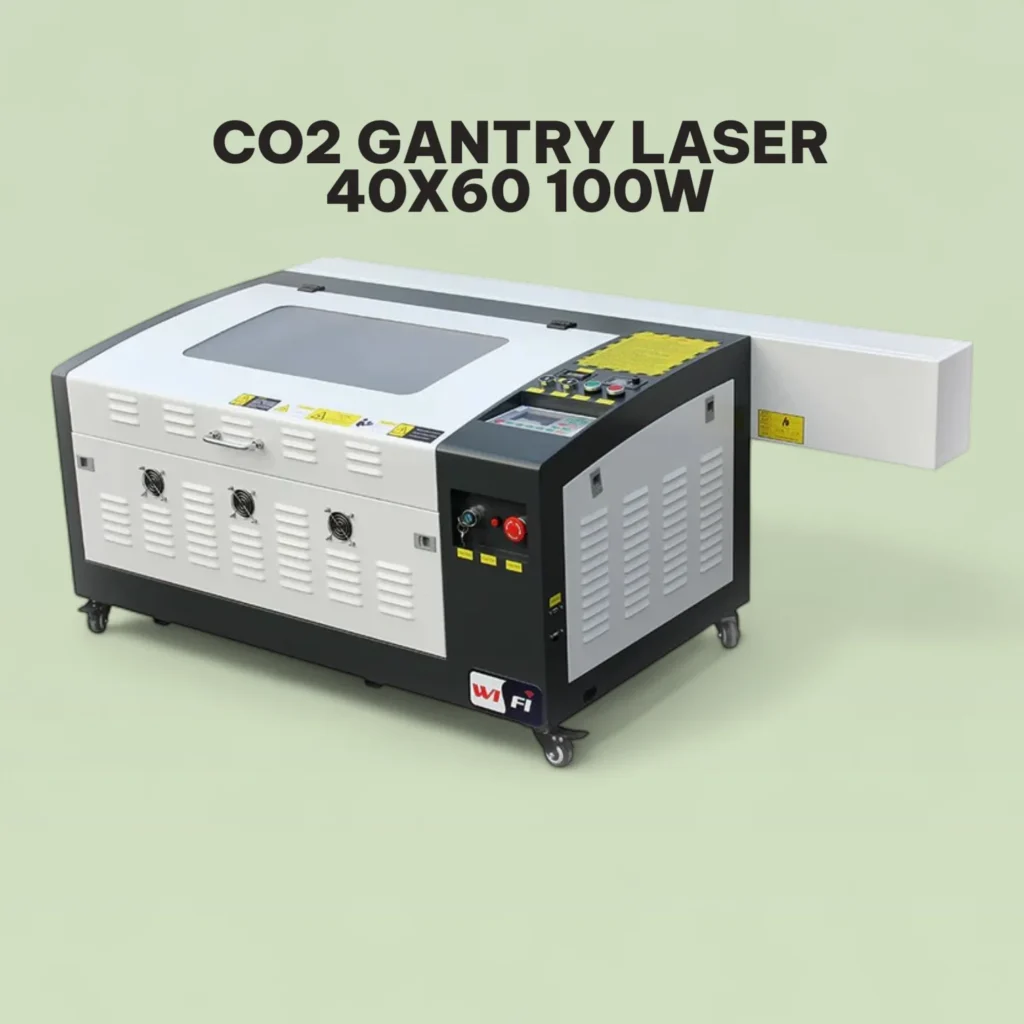
4060 CO2 Laser 60W RF Metal Tube: Production-Grade Engraving and Cutting
The 60W variant of our RF metal tube 4060 platform. Sealed metal tube, air cooled, with 50% more cutting headroom than the 40W. Engineered for shops that run a CO2 laser daily and want the long-term economics of an industrial-grade source rather than a glass tube that gets replaced every 12 to 18 months.
60W RF Metal Tube
400 x 600 mm Bed
Air Cooled
LightBurn Compatible
18 Month Warranty
The Total Cost of Ownership Argument
This page exists to answer one question: why pay $6,900 for a 60W RF metal tube machine when a 100W glass-tube 4060 sells for less than half the price?
Because over five years of daily use, the math tilts the other direction. RF metal tubes are commonly rated at 30,000 to 40,000 working hours. Glass DC tubes in the 60W range typically run 4,000 to 6,000 hours before output drops below useful working levels. A shop running 8 hours a day, 5 days a week, will burn through five to seven glass tubes during the working life of a single RF metal tube.
30,000+
RF tube hours typical
4,000-6,000
Glass tube hours typical
5x to 7x
Lifespan multiplier
No chiller
Air cooled at 60W
Add the chiller you do not need to buy, the distilled water you do not need to maintain, the winter freeze risk that is not on the table, and the production downtime when a glass tube fails. The buyer paying $6,900 today is buying a tool that pays itself back through the absence of recurring tube replacement and chiller-related headaches.
🚚
Free DDP Shipping
US, CA, EU. CIF rest of world.
⚡
Production Speed
Up to 1,500 mm/s travel
🛡️
18 Month Warranty
Lifetime tech support
🎁
$500+ in Gifts
Rotary, glasses, accessories
🔧
LightBurn Ready
Plus RDWorks default
Where the Extra 20 Watts Actually Matter
The jump from 40W to 60W RF is not 50% more of everything. It is 50% more of the thing that matters most: usable cutting depth in single-pass operation. Engraving quality is governed by spot size and beam quality, both of which are largely identical between the 40W and 60W RF tubes. What changes with more power is what you can cut, how thick you can cut it, and how fast you can cut it.
Acrylic single-pass cutting
Roughly 8 to 10 mm clean edge in a single pass at 60W, compared to about 4 to 5 mm at 40W. Buyers cutting acrylic awards, signage, and display panels notice this immediately.
Plywood and MDF cutting
Up to 6 to 8 mm in a single pass for most plywood. The 40W tops out around 3 to 4 mm clean. For sign shops and craft producers this is the difference between routine and impossible.
Throughput at the same depth
For materials that both 40W and 60W can cut, the 60W cuts faster at the same edge quality. On 3 mm acrylic, expect roughly double the linear feed rate. On batch production this turns into real labor cost savings.
Engraving fineness
Identical to the 40W RF in practical terms. Same RF tube architecture, same focused spot, same photo-engraving capability. The 60W is not the choice for "better engraving" but for "engraving plus real cutting."
What This Configuration Actually Does
Engraving
Photo-quality detail at production speed
The smaller focused spot from the RF metal tube delivers cleaner photo engraving and finer text reproduction than glass-tube alternatives at the same wattage. Combined with the 60W headroom, dense engraving fields complete faster without overheating the material.
Cutting
Real production cutting on thin to mid stock
Acrylic up to 10 mm, plywood up to 6 to 8 mm, leather, fabric, paper, cardboard, gasket material, and most rubbers. Sign shops, craft businesses, and prototype shops use this power class as their daily driver.
Air cooled
No chiller, no distilled water, no freeze risk
The metal tube architecture sheds heat through fans and the tube body. There is no water loop to maintain, no chiller to fail, and no winter freeze precautions to plan. Plug the machine in, configure ventilation, and operate.
Repeatable
Output stays constant from job one to job one thousand
RF metal tubes hold output power across their service life much better than glass tubes. A glass tube at 80% of its rated life produces noticeably less power than at install. RF tubes hold their output until very near end of life, then drop steeply and predictably.
Serviceable
Tube can be refilled rather than replaced
At end of working life, RF metal tubes can be returned to the source for gas refill and rebuild. This is a documented advantage over glass DC tubes, which are discarded at end of life. The result is a lower long-term consumables bill across the working life of the machine.
Compatible
Same controllers, same software, same workflow
Ruida main board with full LightBurn and RDWorks support. If you are already running a CO2 laser today, the workflow transfer is direct. Files, fixtures, and processes carry over without learning a new ecosystem.
Technical Specifications
| Effective Working Area | 400 x 600 mm |
|---|---|
| Laser Power | 60W |
| Laser Source | RF metal tube, sealed CO2 (10,600 nm) |
| Cooling | Air cooled |
| Control System | Ruida main board (DSP) |
| Software | RDWorks (default), LightBurn supported |
| Drive Type | Servo motor |
| Linear Rails | HIWIN linear guide rails (Taiwan), timing belt transmission |
| Max Travel Speed | Up to 1,500 mm/s |
| Positioning Accuracy | Better than 0.01 mm |
| Min Character Size | 1 x 1 mm (English text) |
| Worktable | Honeycomb and aluminum knife table (both included) |
| Focus | Auto-focus probe |
| Positioning Aid | Red-dot pointer |
| Rotary Attachment | Included |
| Power Supply | 110V or 220V (specify at order) |
| Software Compatibility | CorelDraw, Photoshop, AutoCAD |
| File Formats | PLT, DXF, BMP, JPG, GIF, PNG, TIF |
| Operating Temperature | 0 to 45 degrees Celsius |
| Production Time | Approximately 45 days from confirmed payment |
Realistic Material Cutting and Engraving Capacity
These figures represent typical results with proper air assist, focused at the standard 2-inch focal length, on quality material. Actual results vary with material density, moisture content, and dye loading.
Cast Acrylic (PMMA)
Cuts up to 10 mm single pass with clean polished edge. Cast acrylic outperforms extruded acrylic for laser cutting in every category.
Plywood (Baltic Birch)
Cuts up to 6 to 8 mm single pass. Higher-quality plywood with consistent layers and low formaldehyde adhesive cuts faster and cleaner.
MDF
Cuts up to 6 mm reliably in a single pass. MDF charrs more than plywood; expect to clean edges with masking tape on the surface.
Solid Hardwood
Cuts up to 6 mm with patience. Walnut, cherry, maple. Engraves freely on any thickness.
Leather
Cuts vegetable-tanned up to 4 mm in single pass. Engraves all leather types beautifully. Avoid PVC-coated and synthetic leather.
Rubber and Gasket
Cuts laser-grade rubber up to 6 mm. Standard rubber stamp die cutting works well. Verify rubber grade is laser-safe before cutting.
Fabric, Felt, Cardboard
Cuts at production speed with no thickness concerns in normal applications. High-volume sign and craft work runs efficiently here.
Paper, Cardstock
Cuts cleanly at high speed. Wedding invitations, paper crafts, packaging prototypes. The fine spot of the RF tube produces less brown edge than glass tubes.
Pre-Purchase Questions From Real Buyers
Why is the 60W RF priced at $6,900 when the 100W glass-tube 4060 is $3,500?
Different machine class, different total cost over time. The 100W glass tube unit is the right choice when upfront cost is the deciding factor and the machine will be used part-time. The 60W RF metal is the right choice when the machine will run daily for years and the buyer wants to stop replacing tubes. By year three of regular operation, the math typically favors the RF tube. By year five, it is not close.
Does the 60W RF tube also avoid the chiller, like the 40W version?
Yes. RF metal tubes at 60W are still cooled by the air-cooling system built into the machine. The metal tube body and integrated heatsinks dissipate heat without a water loop. This is one of the practical advantages over a 60W glass tube of similar power, which always requires water cooling.
Is this machine going to be loud?
Notably quieter than the equivalent water-cooled glass-tube machine. The fans built into the cooling system are the dominant noise source, since there is no water pump cycling continuously and no chiller compressor in the room. Most operators report being able to hold a conversation next to the running machine.
How does the 60W compare to a 60W CO2 galvo from Haotian?
Different tools for different jobs. The 60W CO2 galvo is built for production drinkware, where the workflow benefits from electronic beam steering instead of moving a gantry head. The 60W RF metal is built for flat sheet engraving and cutting on the 400 x 600 mm bed, with a rotary attachment available for occasional cylindrical work. Buyers running daily tumbler production should buy the galvo. Buyers running flat-stock work with occasional cylindrical jobs should buy this machine.
What if the RF tube ages out before the machine does?
RF metal tubes are designed as serviceable assemblies. At end of working life, the tube returns to the manufacturer for gas refill and rebuild rather than replacement. This is one of the structural cost advantages over glass tubes, which are discarded at end of life. Plan on the same machine staying productive for many years rather than one tube's worth of operation.
Will the unit work with my existing LightBurn license and project files?
Yes. The Ruida controller is one of the most widely supported control systems in LightBurn. Project files transfer directly from another Ruida-controlled machine. Layer settings, kerf compensation, and rotary configuration carry over with no rework. Operators familiar with one Ruida machine are productive on this one within a workday.
Where the 60W RF Fits in the Lineup
| Capability | 60W RF Metal (this) | 40W RF Metal | 100W Glass Tube 4060 |
|---|---|---|---|
| Price point | $6,900 | $4,500 | $3,500 |
| Tube technology | RF metal | RF metal | Glass DC |
| Tube lifespan typical | 30,000+ hours | 30,000+ hours | 4,000-6,000 hours |
| Acrylic single-pass cut | Up to 10 mm | 4-5 mm | Up to 12 mm |
| Cooling required | Air, no chiller | Air, no chiller | Water chiller required |
| Engraving fineness | Excellent | Excellent | Good |
| Best for | Daily-use production shops | Quality-first part-time use | Budget cutting capacity |
Where This Machine Is Not the Right Fit
If raw cutting capacity is the only thing you care about, the 100W glass-tube 4060 cuts thicker stock and costs less today. The 60W RF wins on tube longevity, beam quality, and air cooling. Pick based on which axis of cost matters most to you.
If you are running daily drinkware production, a 60W CO2 galvo cycles tumblers in seconds because the beam steers electronically. The HT-460 with rotary attachment handles occasional cylindrical work, but it is not the right tool for full-time tumbler operations.
This machine cannot mark or cut bare metal. The 10,600 nm CO2 wavelength reflects off metal surfaces. Use a fiber laser for metal work.
PVC, vinyl, and chlorinated polymers are off limits on every CO2 laser. Burning these materials releases chlorine gas that destroys laser optics and harms operators. This is universal across every CO2 machine on the market.
What Ships in the Crate
HT-460 main machine, 60W RF metal tube installed
Ruida main board, RDWorks software
LightBurn license activation guide
Honeycomb worktable
Aluminum knife (blade) worktable
Rotary attachment for cylindrical work
Auto-focus probe
Red-dot pointer
CO2 safety glasses (10,600 nm rated)
Power cable matched to your voltage
USB cable, manual, accessory kit
Standard set of focus lenses
Detailed Buyer Questions
What is the actual electrical draw and outlet requirement?
Total system power draw is well below 1,500 watts even under continuous full-power cutting. A standard 110V 15A North American outlet is sufficient. In 220V markets a standard 10A circuit is more than enough. The machine ships configured for whichever voltage you specify at order. There is no need for dedicated circuits, transformers, or industrial-grade wiring.
How does the 60W RF metal compare to a name-brand 60W RF tube like Synrad?
Same fundamental technology and similar working life expectations. The major name brands publish 30,000 to 40,000 hour service life figures for their 60W RF products and our source publishes similar figures. The price difference between the imported branded machines and the same RF tube technology in our 4060 platform is largely the price of the brand badge, not the underlying tube specification.
Can the 60W RF tube be retrofit-replaced if it is damaged outside warranty?
Yes. The RF metal tube is a removable assembly with documented mounting points and standard high-voltage connectors. Replacement tubes are available either through Haotian directly or through aftermarket RF tube specialists. Glass tubes in the 100W class are similarly serviceable, but RF tubes typically reach end of life decades later in calendar time.
How is the rotary attachment configured and what diameter range does it handle?
The rotary connects to the Y-axis driver in the standard Ruida configuration and shows up directly in LightBurn under the Rotary Setup screen. Standard chuck range covers diameters from approximately 10 mm up to 200 mm. Common applications include tumblers, wine glasses, ring blanks, dowels, and cylindrical product packaging.
Does the machine ship with air assist hardware?
The machine includes the air assist nozzle, hose, and onboard solenoid for software-controlled air assist switching. Buyers should plan to source a small air compressor locally rather than wait for a large overseas shipment. A 1/3 to 1/2 horsepower oilless compressor is sufficient for typical operation. Integrated compressors push shipping costs up significantly without adding capability.
What is the realistic warmup time before the first job of the day?
RF metal tubes reach stable output power in under 60 seconds from cold start. There is no chiller to bring up to temperature, no water flow to verify, and no glass tube thermal stabilization period. This is one of the practical workflow advantages over glass tube machines, where buyers typically wait 5 to 15 minutes for the chiller to reach temperature before starting a precision job.
How much workshop ventilation is needed?
An exhaust fan rated at 4 to 6 inch duct diameter handles the 60W output cleanly when the duct length stays under 10 feet. Plan for outside venting through a window or wall, or an inline activated-carbon filter for indoor environments. Cutting MDF, plywood, leather, and rubber produces strong odors that need to leave the workshop, not just be moved around.
Can multiple machines be controlled from one computer?
Yes. LightBurn supports multiple Ruida controllers from a single workstation, with separate device profiles for each machine. Production shops running two or three of these in parallel typically use one computer with USB hubs to manage all machines. Each machine maintains its own job queue and operates independently.
Warranty Coverage
- 18 months on the machine
- Lifetime technical support, English language
- Non-laser parts: free replacement parts and shipping during warranty
- RF tube: ship the unit to us for repair, all freight covered both ways
- Setup and calibration assistance via remote session
Delivery Terms
- Production: approximately 45 days from confirmed payment
- DDP to US, Canada, EU: approximately 30 days, all duties included
- CIF rest of world: 12 to 14 days transit, customer handles import duties
- Tracking number provided once the unit leaves our facility
- Crate matches standard sea-freight pallet dimensions
Other Machines to Consider
Talk to Us Before You Order
Send us your application, your typical materials, and the volume you plan to run. We respond within one business day with detailed answers, sample images on your specific materials when relevant, and configuration recommendations matched to the work you do.
Email Our Sales Team Contact Page