

RF Metal Tube
30,000+ Hour Lifespan
Air Cooled (No Chiller)
LightBurn + RDWorks
18 Month Warranty
🚚
Free DDP Shipping
US, Canada, EU. CIF rest of world.
🔬
Premium RF Tube
Sealed metal chamber, no glass
🎯
Fine Spot Size
Tighter focus than glass tubes
🛡️
18 Month Warranty
Lifetime technical support
🎁
$500+ Free Gifts
Rotary, safety glasses, accessories
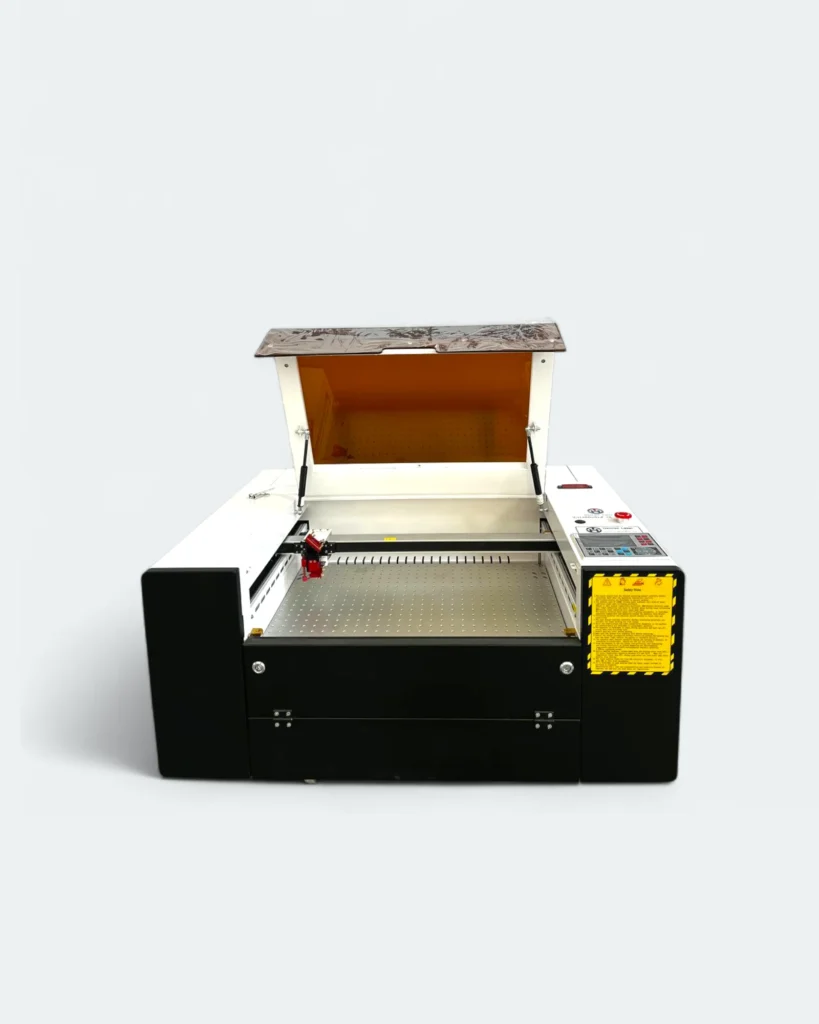
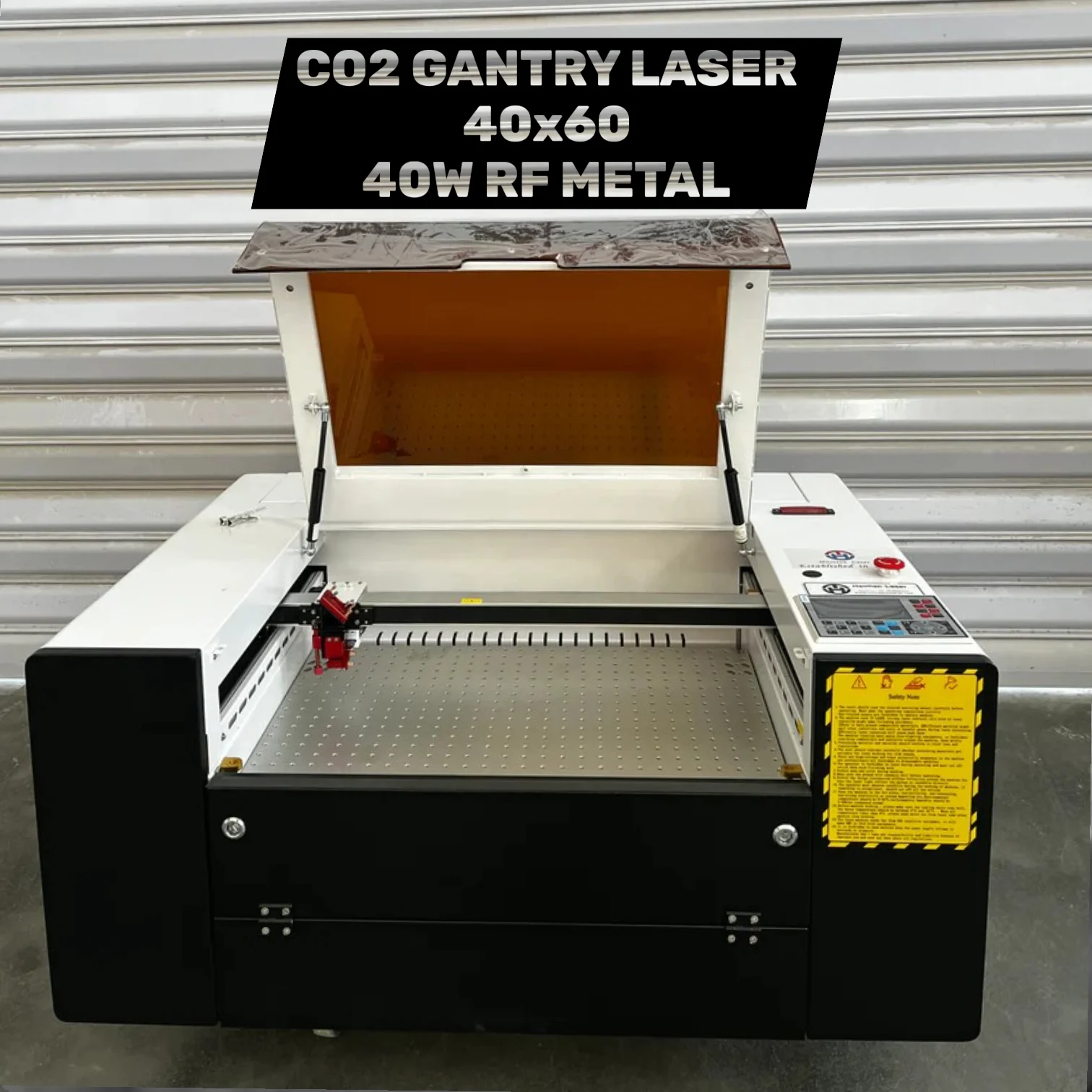
HT-460 CO2 Laser Engraver: 40W RF Metal Tube, 400 x 600 mm Bed
The HT-460 is built around an RF metal tube, not a glass DC tube. The two are not the same product class. RF metal tubes typically last 30,000 hours or more compared to roughly 1,500 to 10,000 hours for glass DC tubes, and they produce a smaller focused spot for finer engraving detail.
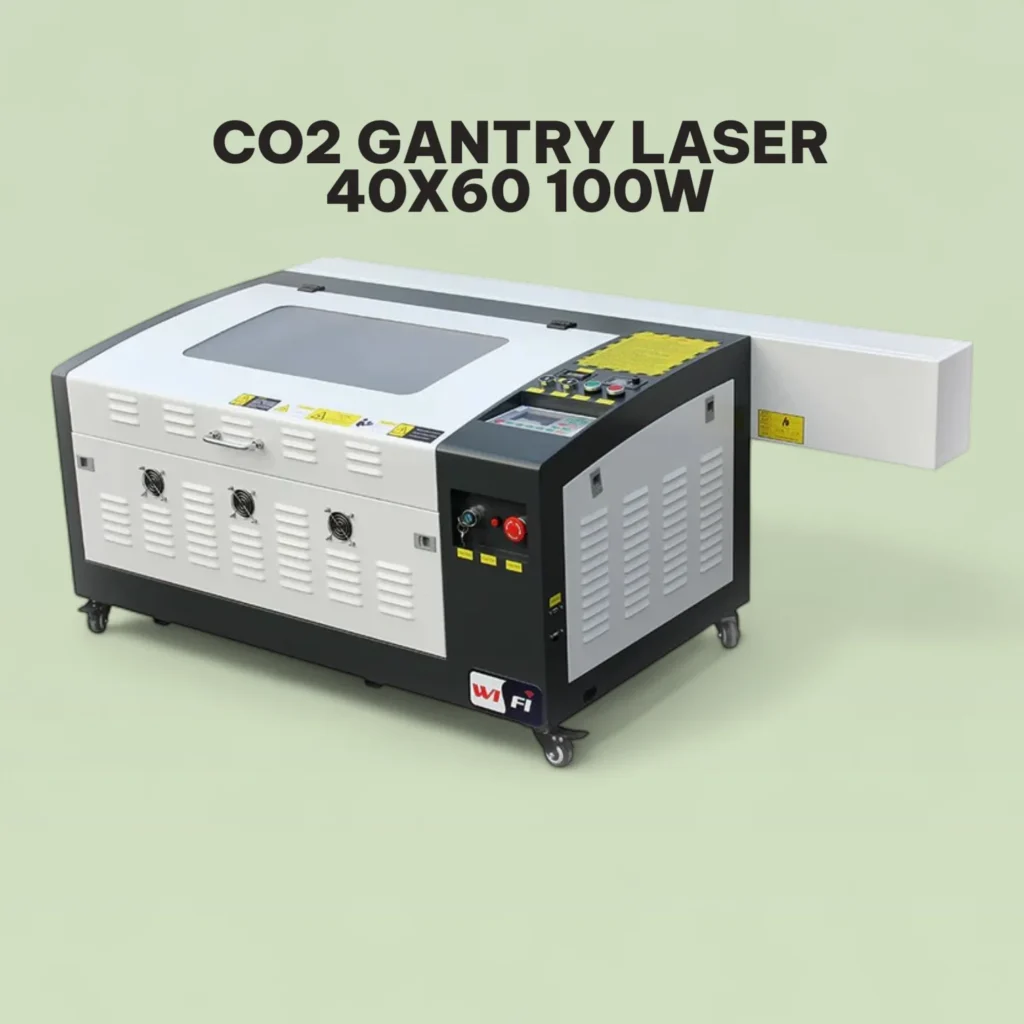
This is the machine to choose when engraving quality, photo-realistic detail, and tube longevity matter more than raw cutting power. For thicker cutting work, the 100W 4060 glass-tube gantry is the better tool. The HT-460 is the precision engraving option in the same form factor.
Why the RF Metal Tube Matters
1
Sealed Metal Tube, Built to Last
RF metal tubes use a hermetically sealed metal chamber instead of fragile glass. Industry-published lifespans run 30,000 to 50,000 hours of operation, with the option to refill gas at end of life. Glass DC tubes typically run 1,500 to 10,000 hours and fail catastrophically when cracked or thermally shocked.
2
Tighter Focus, Cleaner Engraving
RF tubes produce a smaller raw beam diameter and a tighter focused spot than glass DC tubes. The result is finer engraving lines, cleaner photo reproduction, and crisper text at small font sizes. This is why RF tubes are the standard choice for industrial precision engraving systems.
3
Air Cooled, No Chiller Required
The metal tube architecture allows efficient air cooling at this 40W power level. There is no water chiller to set up, no distilled water to maintain, no winterization to worry about, and no risk of a chiller failure damaging the tube. Plug it in and operate.
4
HIWIN Linear Rails From Taiwan
The X and Y axes ride on HIWIN linear guide rails, the Taiwanese standard used across precision CNC equipment. Combined with servo motor drive and timing belt transmission, this delivers the positioning accuracy of better than 0.01 mm needed for clean photo engraving and small-text work.
5
Ruida Controller With Full LightBurn Support
The HT-460 ships with a Ruida main board running RDWorks, and full LightBurn compatibility is built in. Switch between the two without modifying the controller. Honeycomb table and aluminum knife table both included as standard, with auto-focus, red-dot positioning, and rotary attachment for cylindrical work.
Technical Specifications
| Effective Working Area | 400 x 600 mm |
|---|---|
| Laser Power | 40W |
| Laser Source | RF metal tube, sealed CO2 (10,600 nm) |
| Cooling | Air cooled (no chiller required) |
| Control System | Ruida main board (DSP) |
| Software | RDWorks (default), LightBurn supported |
| Drive Type | Servo motor |
| Transmission | Timing belt with HIWIN linear guide rails (Taiwan) |
| Max Engraving Speed | Up to 1,500 mm/s |
| Positioning Accuracy | Better than 0.01 mm |
| Min Character Size | 1 x 1 mm (English text) |
| Worktable | Honeycomb and aluminum knife table (both included) |
| Focus | Auto-focus |
| Positioning Aid | Red-dot pointer |
| Rotary Attachment | Included |
| Power Supply | 110V or 220V (specify at order) |
| Software Compatibility | CorelDraw, Photoshop, AutoCAD |
| File Formats | PLT, DXF, BMP, JPG, GIF, PNG, TIF |
| Operating Temperature | 0 to 45 degrees Celsius |
| Machine Dimensions | 110 x 79 x 48 cm |
| Machine Weight | 104 kg |
| Production Time | Approximately 45 days from payment |
What Buyers Ask Before Ordering
Why pay $4,500 for a 40W when I can buy a 100W glass-tube 4060 for less?
Different machine class. The 100W glass-tube gantry is the right tool when cutting capacity matters most. The HT-460 RF metal tube is the right tool when engraving detail and tube longevity matter most. RF metal tubes typically run 30,000+ hours versus 1,500 to 10,000 hours for glass DC tubes. Over the working life of a small business, the RF tube does not need replacement and produces visibly finer engraving on photos, fine text, and detailed art.
Can it cut materials, or is it engraving only?
It cuts thin non-metals at 40W. Realistic cutting depths are around 3 to 5 mm acrylic, 3 to 4 mm thin plywood, leather, paper, cardboard, fabric, felt, and rubber. For thicker cutting work, 60W to 100W glass-tube gantry machines have more cutting headroom. Buyers focused on cutting capacity should consider the 100W 4060 or the 100W 6090.
Does the RF tube actually cut metal?
No. RF metal refers to the construction of the tube chamber, not the cutting capability. The CO2 wavelength of 10,600 nm reflects off bare metals. For metal cutting use a CNC fiber laser cutter. For metal marking use a fiber galvo laser. The HT-460 processes non-metal materials only.
Why is air cooling acceptable on this machine when 80W and 100W CO2 machines need water chillers?
Two reasons. First, RF metal tubes are more thermally efficient than glass tubes. Second, 40W is a moderate power level where air cooling is sufficient with proper airflow management. Higher-wattage RF systems (60W and above) move to water cooling for the same reason higher-wattage glass tubes do.
Will it engrave coated tumblers and drinkware?
It can mark coated drinkware, but a CO2 galvo machine is the better tool for production tumbler workflows. A galvo cycles the design in seconds because the beam steers electronically rather than moving the gantry head. For occasional drinkware work the HT-460 with the rotary attachment will produce clean results. For tumbler-focused production the 40W or 60W CO2 galvo is the right purchase.
What is the realistic engraving speed on detailed work?
The 1,500 mm/s figure is the maximum platform speed during long-stroke moves. Real engraving speed on detailed work is governed by the size and density of the artwork, line interval, and material absorption. Photo engraving on wood typically runs in the 200 to 600 mm/s range. Plain text on acrylic runs faster. The RF metal tube produces consistent power across long runs, so quality stays constant from the first pass to the last.
HT-460 RF Metal vs Other Haotian CO2 Machines
| Capability | HT-460 40W RF | 100W 4060 Glass | 40W CO2 Galvo |
|---|---|---|---|
| Tube lifespan | 30,000+ hours | 1,500-10,000 hours | 30,000+ hours |
| Engraving fineness | Excellent (small spot) | Good | Excellent |
| Cutting capacity | Thin only (3-5 mm) | Up to 12 mm acrylic | Cannot cut |
| Bed size | 400 x 600 mm | 400 x 600 mm | 110 x 110 mm |
| Cooling | Air (no chiller) | Water chiller required | Air (no chiller) |
| Tumbler production | Possible with rotary | Possible with rotary | Best tool |
| Best for | Photo engraving, fine detail | Cutting wood, thick acrylic | Tumblers, drinkware |
What This Machine Cannot Do
It cannot mark or cut bare metal. Bare stainless, aluminum, brass, copper, and titanium reflect the 10,600 nm CO2 wavelength. For metal work use a fiber laser.
It is not a thick-material cutter. 40W limits cutting depth to roughly 3 to 5 mm acrylic and 3 to 4 mm thin plywood. For routine thick cutting, choose a 60W to 100W glass-tube gantry instead.
It is not a tumbler production machine. A CO2 galvo will out-produce it on drinkware. The HT-460 does occasional rotary work well, but full-time drinkware operations should buy the right tool for the job.
PVC and vinyl are off limits. Burning PVC releases chlorine gas that destroys laser optics and harms the operator. This applies to every CO2 machine, not just this one.
What Ships With Every HT-460
- HT-460 main machine with 40W RF metal tube installed
- Ruida controller and RDWorks software (LightBurn compatible)
- Honeycomb worktable
- Aluminum knife (blade) worktable
- Rotary attachment for cylindrical work
- Auto-focus probe
- Red-dot positioning pointer
- Safety goggles rated for 10,600 nm CO2 wavelength
- Power cable matched to your voltage (110V or 220V)
- USB cable and operation manual
- Standard set of focus lenses
Frequently Asked Questions
Is the RF metal tube field-replaceable when it eventually wears out?
Yes. RF metal tubes are designed as serviceable assemblies. After many thousands of hours of use, the gas mixture loses pressure and output power drops, at which point the tube can be returned to the source manufacturer for gas refill and rebuild rather than full replacement. This is one of the cost advantages over glass DC tubes, which are normally discarded at end of life.
What is the realistic working life of a glass tube versus this RF tube?
Industry-published figures place glass DC tubes at roughly 1,500 to 10,000 hours of operation, with quality varying widely between brands. Well-built RF metal tubes are commonly rated at 30,000 to 50,000 hours, with refill options extending the working life further. For a small business running 4 to 8 hours a day, this difference can mean the RF tube outlasts the rest of the machine.
Does the smaller spot size really make a visible difference?
Yes, on detailed work. RF tubes produce a smaller raw beam and tighter focused spot than glass DC tubes. On photo engraving, fine text below 6 mm, and detailed line art, the difference shows up as cleaner edges and better gray-scale tonal range. On rough cutting and large simple shapes, the difference is negligible.
Will this run on a standard household 110V outlet in the US?
Yes. Specify 110V at the time of order and the machine ships configured for North American power. Total power draw is well below the limit of a standard 15A circuit. Buyers in 220V markets should specify 220V to avoid the need for a step-up transformer.
Do I need ventilation or an exhaust fan for this machine?
Yes. Every CO2 laser produces fumes when processing organic materials. The standard configuration includes an exhaust port for connection to either an outside-vented duct or an inline activated-carbon filter. Plan for ventilation as part of the workspace setup before the machine arrives.
How does autofocus work on this model?
The auto-focus system uses a contact probe that touches the material surface, retracts a calibrated distance, and locks the Z-axis at the correct focal height. This eliminates the manual ruler step that older 4060 gantries required, and it ensures consistent focus across batches of the same material.
Can I use the rotary attachment with the LightBurn software directly?
Yes. The rotary connects to the Y-axis driver and works with the Rotary Setup screen in LightBurn. The same configuration applies in RDWorks. Both software environments support cylindrical work, batch tumbler runs, and ring engraving without third-party plugins.
What is the production lead time and how long does shipping take?
Production runs approximately 45 days from confirmed payment, since each machine is built to order rather than pulled from inventory. After production, shipping takes about 30 days to the United States, Canada, and EU under DDP terms (door to door including customs duties), or 12 to 14 days CIF to other countries.
Warranty Coverage
- 18 months on the machine
- Lifetime technical support
- All non-laser parts: free replacement parts and shipping during the warranty period
- Laser source: ship the unit to us for repair, all shipping covered both ways
- English-speaking support team for setup, calibration, and troubleshooting
Delivery and Shipping
- Production: approximately 45 days from payment
- DDP to US, Canada, EU: approximately 30 days, all duties included
- CIF rest of world: 12 to 14 days, customer pays import duties
- Crate dimensions match a standard sea-freight pallet
- Tracking provided once the unit leaves our facility
Related Products in the Haotian CO2 Lineup
Ready to Order the HT-460?
Send any pre-purchase question to our team. We respond within one business day with detailed answers, sample images, and configuration recommendations matched to your application.
Email Our Sales Team Contact Page