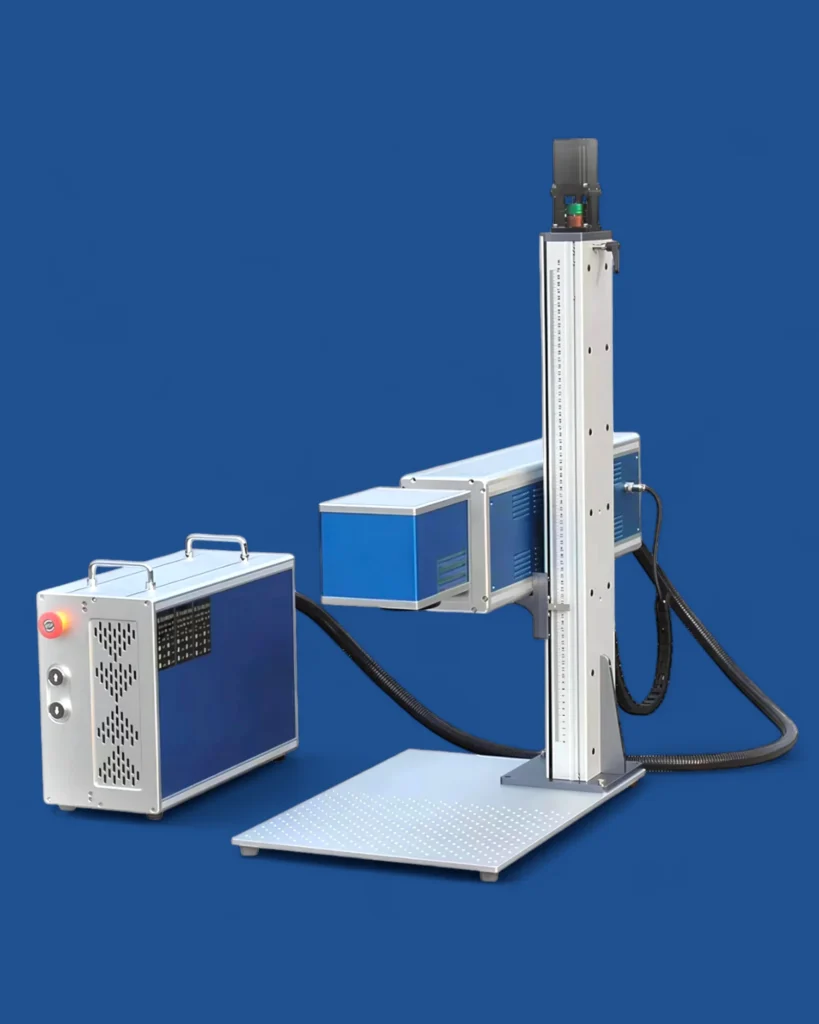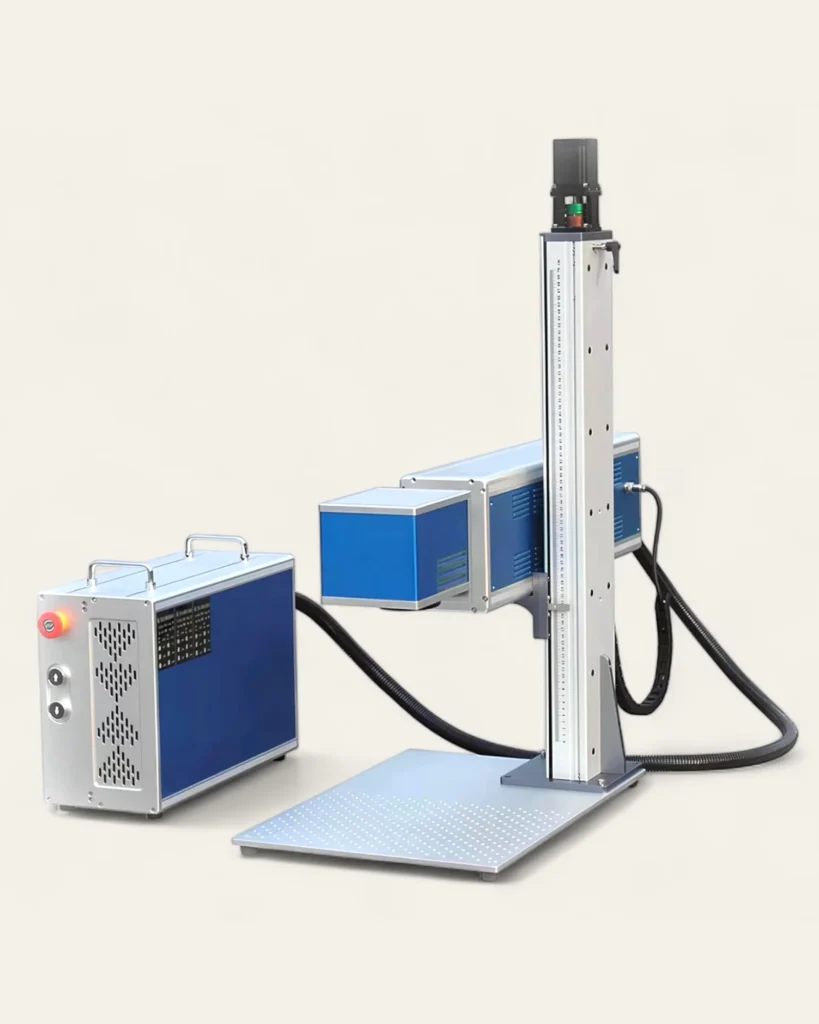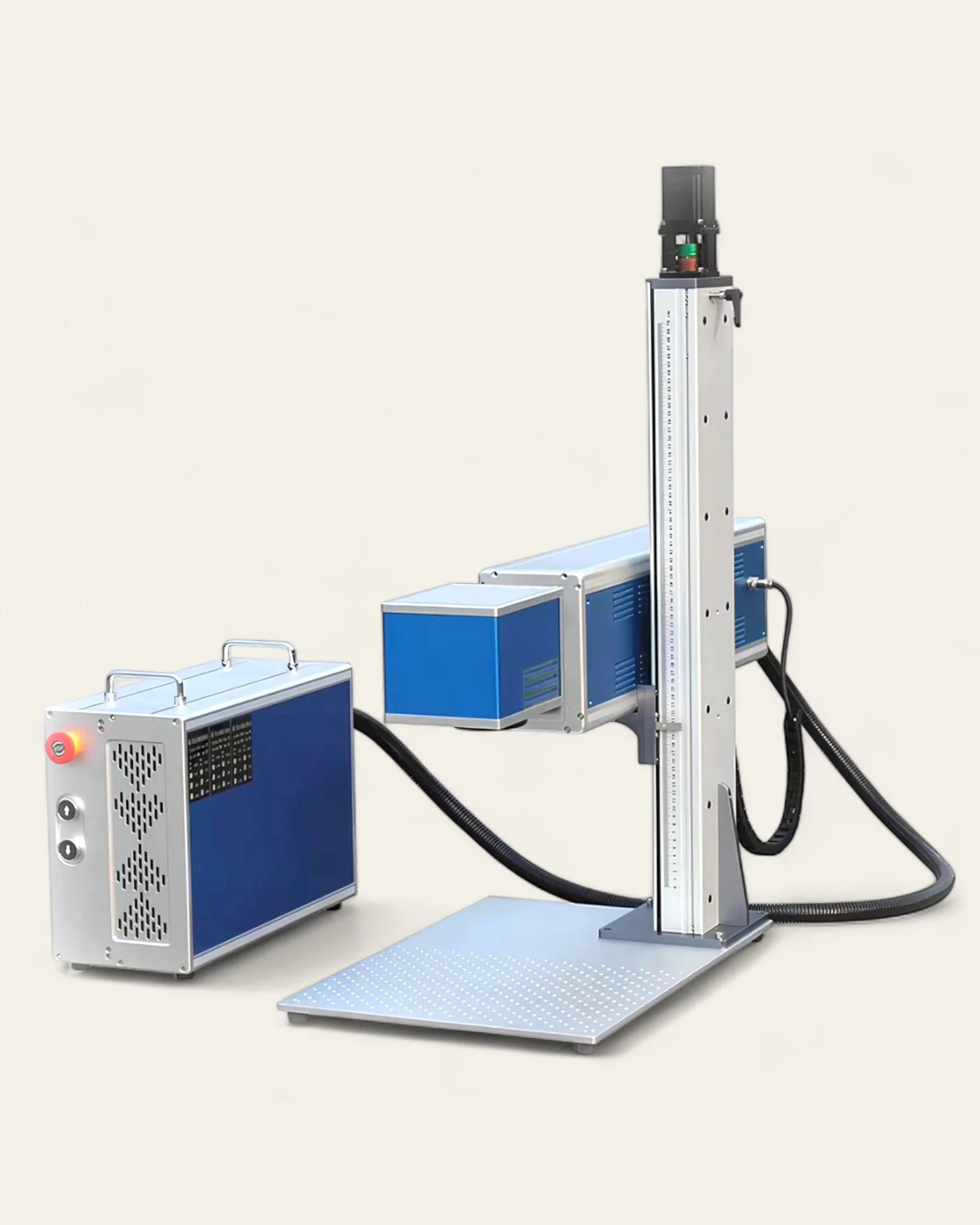


40W DAVI Metal RF Tube
Tumbler-Ready
18-Month Warranty
Air Cooled, No Chiller
M² Less Than 1.2
🚚Free DDP US/CA/EU
🎯DAVI RF Source
🛡️18-Month Warranty
🎁Free Rotary + Glasses
💬Lifetime Email Support
40W CO2 Galvo Laser: The Tumbler Marking Machine Buyers Should Have Bought First
The fiber laser mistake costs new tumbler businesses an average of two to three months of wasted runtime. They buy a fiber laser, find that the powder coating leaves burned residue or refuses to lift cleanly, then come back looking for the right tool. The 40W CO2 galvo with a DAVI metal RF tube is the right tool. It vaporizes powder coating and paint without scoring the stainless underneath, and it does the same job on wood, leather, paper, acrylic, and dozens of other non-metal materials a fiber laser cannot touch.
This is the entry point for a small business building a drinkware line, a gift shop adding personalization, or a maker who wants one machine that handles tumblers, ornaments, leather patches, and wood signs without compromise.
The Physics: Why CO2 Is The Right Tool For Coated Drinkware
10,600 nm Wavelength Behaves Differently Than Fiber
This is the single most important fact when picking between a fiber laser and a CO2 galvo. Fiber lasers fire at 1,064 nm, which is absorbed by bare metals. CO2 lasers fire at 10,600 nm, which is absorbed by organic materials and coatings, and reflected by bare metals. Same scanning architecture, completely different material behavior.
✓ Strongly absorbed (CO2 works)
Powder coating, paint, lacquer, anodized layers, wood, bamboo, leather, paper, cardboard, acrylic, rubber, silicone, fabric, glass surfaces, stone, slate, ceramic.
✗ Reflected (CO2 cannot mark)
Bare stainless steel, bare aluminum, bare brass, bare copper, bare titanium, any uncoated metal. For these you need a fiber laser, not CO2.
The tumbler workflow exploits this exact contrast. The CO2 beam vaporizes the colored powder coating layer and stops cold at the bare stainless underneath, which reflects the wavelength. The metal cup body is untouched. The mark is permanent because the coating is gone, not because the metal is etched. This is why the result is clean, why it does not fade, and why it does not warp the cup.
Five Reasons This Machine Is Right For Tumbler Work
1
DAVI Metal RF Tube, Not Glass
The DAVI source is a sealed metal radio-frequency tube and is widely considered the best CO2 source brand made in China. Unlike fragile glass DC tubes that need water cooling and lose power gradually, this metal RF tube is air cooled, rated for tens of thousands of operating hours, and produces a stable beam with M² beam quality below 1.2. That tight beam is why fine text and small logos on a tumbler come out crisp instead of fuzzy.
2
Air Cooled, No Chiller, No Maintenance Tax
Glass DC tube CO2 machines need a separate water chiller, distilled water, regular flow checks, and winter freeze protection if your shop gets cold. The 40W metal RF tube is air cooled. There is no chiller, no pump, no leaks, no antifreeze, no morning warmup. Plug it in and start working. This is the largest practical advantage of metal RF tubes over older glass tube machines, and it removes an entire category of failure points.
3
Sino Galvo Scanning Head With 8X Beam Expander
This machine ships with a Sino Galvo RC2808 scanning head, an 8X beam expander, and a 20 mm aperture optical path. The expander tightens the focused spot for finer detail, and the galvo motors hit marking speeds up to 800 mm/s. For comparison, a typical entry CO2 gantry machine engraves at about 100 to 300 mm/s. Galvo is the right architecture when you need throughput on small parts.
4
EZCad Original Plus LightBurn Galvo Compatibility
You get the original EZCad controller and software, not the Lite version that ships on cheaper machines. EZCad Original supports advanced features like dynamic focus, variable-data marking for serial numbers, and finer control over fill patterns. If you prefer LightBurn, this machine works with the Galvo edition of LightBurn directly. No conversion, no workarounds. Mac users typically choose the LightBurn route since EZCad is Windows-only.
5
Heavy Duty 500 mm Motorized Z-Tower
The motorized 500 mm Z-axis tower is the same heavy duty tower used on Haotian's larger production fiber lasers. You can park a 30 oz tumbler on the bed with a rotary attachment, dial in focus from the control panel, and start engraving. Manual lift columns on competing machines wear out, drift out of square, and slow down setup. A motorized Z is one of those quality-of-life details that pays for itself within weeks.
What This Machine Can And Cannot Mark
A condensed material capability matrix. Settings vary by tube hours, lens, and material batch, so treat the "Yes" entries as starting points and always test on scrap before committing to a final job.
| Material | Capability | Notes |
|---|---|---|
| Coated stainless tumblers | Excellent | The flagship use case. Removes powder coat to reveal bare metal. |
| Painted metal surfaces | Excellent | Same physics as tumblers. Removes paint layer cleanly. |
| Anodized aluminum | Excellent | Removes the anodized layer to reveal raw aluminum underneath. |
| Wood (small items) | Excellent | Plaques, coasters, cake toppers, pen blanks. Softwoods need less power than hardwoods. |
| Leather (real and synthetic) | Excellent | Wallets, belts, patches, dog collars, watch straps. High speed prevents charring. |
| Acrylic (cast) | Excellent | Surface engraving produces a frosted white finish. Cast acrylic gives stronger results than extruded. |
| Paper and cardboard | Excellent | Wedding invitations, business cards, gift tags. Use very low power on thin stock. |
| Glass (surface marking) | Acceptable | Frosted finish for awards and decorative work. UV laser gives cleaner results. |
| Rubber and silicone | Good | Custom stamps, gaskets, grips. |
| Bare stainless steel | Cannot do | Wavelength reflects. Use a fiber laser instead. |
| Bare aluminum, brass, copper | Cannot do | Wavelength reflects. Use a fiber laser instead. |
| Color marking on stainless | Cannot do | Requires a MOPA fiber laser with adjustable pulse width. |
| Sheet metal cutting | Cannot do | Use a CNC fiber laser cutter, not a galvo machine. |
| Glass drilling (through holes) | Cannot do | Requires a JPT M8 fiber laser with G3 PRO 2.5D galvo and EZCad3. |
The Tumbler Workflow, Step By Step
What an actual production cycle looks like on this machine
- Design in LightBurn or EZCad. Import your logo as a vector or raster file. The machine accepts AI, PLT, DXF, BMP, DST, DWG, LAS, DXP, and more.
- Mount the tumbler on the rotary attachment. Use a digital angle gauge to confirm the cup is perfectly horizontal in the chuck. Even one or two degrees of tilt produces visible distortion across a wrap.
- Calibrate steps per rotation. The first time you run a new rotary motor, set the steps-per-rotation parameter (typically 5,000 to 12,800 depending on the motor). Run a framing pass to confirm the design starts and ends in the same place. Once calibrated, this setting stays put.
- Use the blue tape trick. Cover the tumbler with blue painter's tape, run a framing pass, mark a test pattern on the tape. This lets you verify alignment without committing to the actual cup. Once the tape test confirms the design lands where you want it, peel the tape and run the real job.
- Focus. Use the dual red-dot system on the scanning head. Adjust the motorized Z-axis until the two red dots merge into one on the cup surface. Lock the Z position.
- Run. Press the foot pedal. A typical 2-inch tumbler logo finishes in 15 to 30 seconds with the standard 110 x 110 mm field.
Technical Specifications
| Laser Source | DAVI Metal RF Tube (sealed, air cooled) |
|---|---|
| Laser Power | 40W average |
| Wavelength | 10,600 nm |
| Beam Quality (M²) | Less than 1.2 |
| Pulse Frequency | 0 to 25 kHz |
| Max Marking Speed | 800 mm/s |
| Min Linear Width | 0.01 mm |
| Min Character Size | 0.15 mm |
| Max Marking Depth | 1 mm (on suitable substrates) |
| Standard Working Area | 110 x 110 mm (with 70x70, 150x150, 175x175, 210x210, or 300x300 mm available) |
| Scanning Head | Sino Galvo RC2808 with 8X beam expander, 20 mm aperture |
| Z-Axis | Heavy duty motorized 500 mm tower |
| Worktable | Fixed aluminum base |
| Cooling | Air cooled (no chiller needed) |
| Controller | BJJCZ controller |
| Software | EZCad Original (not Lite), LightBurn Galvo compatible |
| Operating System | Windows XP, 7, 8, 10 (32 or 64 bit), macOS via LightBurn Galvo |
| Data Transfer | USB 2.0 |
| Supported File Formats | AI, PLT, DXF, BMP, DST, DWG, LAS, DXP and more |
| Package Weight | 60 kg |
| Package Size | 850 x 550 x 590 mm |
| Power Input | 110V or 220V (specify when ordering) |
What Owning This Machine Actually Looks Like
Three things every CO2 galvo owner should plan for. None of these are dealbreakers, but pretending they do not exist would be dishonest.
Daily Lens Cleaning
CO2 marking on coated drinkware, leather, and wood produces more particulate fume than fiber marking on bare metal. The fume settles on the F-theta lens. Clean it with isopropyl alcohol and a lint-free wipe at the start of every session. A neglected lens can lose 30% or more of effective power within weeks of heavy use.
Ventilation Matters
CO2 marking produces fumes that should be vented outside or filtered through a fume extractor. A simple shop vent through a window with an inline fan is workable for hobby use. A dedicated fume extractor with HEPA and carbon filtration is the right call for a commercial workspace where air quality matters and where the fume otherwise settles inside the cabinet on your optics.
Backup The Calibration File
The machine ships with a factory calibration file (markcfg7) that tells the controller how to translate vector coordinates into galvo mirror angles for your specific lens. Keep a backup somewhere safe before installing any software updates. If the file is ever overwritten, Haotian can re-send the original, but restoring from your own backup is faster.
Common Buyer Questions, Answered Honestly
Will this damage the metal of a stainless steel tumbler?
No. The CO2 wavelength removes the powder coating and stops at the metal surface. Bare stainless reflects 10,600 nm light. This is the physical reason CO2 is the correct tool for coated drinkware.
How fast can I engrave a tumbler logo?
For a typical 2-inch logo on a coated tumbler, expect 15 to 30 seconds per cup with the standard 110 x 110 mm field and a rotary attachment. Wrap-around designs take longer. If you need to wrap fully around a 30 oz tumbler in one pass at faster speeds, the 60W CO2 galvo is the better choice.
Do I need a separate water chiller?
No. The DAVI metal RF tube is air cooled. There is no chiller, no pump, no risk of leaks, and no winter freeze protection to worry about. This is one of the largest advantages of metal RF tubes over older glass DC tube machines.
Can I run this on standard household power?
Yes. The machine is configured for 110V or 220V. Specify your country when ordering and Haotian builds it to your requirement. Total power draw is well under what a normal household 15-amp circuit handles.
What software comes with it?
EZCad Original software, not the cut-down Lite version. LightBurn Galvo edition is compatible. No license fees, no subscriptions, no surprise renewal costs from Haotian (LightBurn itself is sold separately by LightBurn).
Is the rotary attachment included?
Yes. You pick a free D80 rotary (for cups and tumblers up to 70 mm diameter) or a D100 rotary (for larger cups and tumblers up to 90 mm) when you order. Safety glasses and the standard lens are also included.
What This Machine Cannot Do
Honest Disclosure
Every Haotian product page tells buyers what the machine is not for. This builds trust and prevents wasted money on the wrong tool.
- Cannot mark bare metal. CO2 wavelength reflects off bare stainless, aluminum, brass, and copper. For bare metal marking and engraving you need a fiber laser, not CO2.
- Cannot do color marking on stainless. Color marking requires a MOPA fiber laser with adjustable pulse width. CO2 cannot produce annealed colors on metal.
- Cannot cut sheet metal. CO2 galvo machines are markers and surface engravers, not sheet cutters. For metal cutting use a CNC fiber laser cutter.
- Limited working area. The standard 110 x 110 mm field is right for tumblers, mugs, leather patches, and small wood items. For full-wrap designs at higher speed, the 60W CO2 galvo gives more headroom.
- Cannot cut acrylic or wood thicker than thin sheets. A 40W galvo can score and surface-engrave acrylic and wood, but for cutting through thicker stock you need a CO2 gantry machine.
40W CO2 Galvo vs 60W CO2 Galvo
| 40W CO2 Galvo | 60W CO2 Galvo | |
|---|---|---|
| Best For | Tumblers, small drinkware, gifts | Full-wrap tumblers, production volume |
| Cooling | Air cooled | Water cooled (chiller included) |
| Setup Complexity | Plug in and go | Chiller hookup required |
| Wrap Speed | Standard | Faster full wraps |
| Daily Volume | Up to ~50 cups/day | 50+ cups/day production |
| Footprint | Smaller | Larger (chiller adds space) |
| Price | $4,100 | $7,100 |
What Ships With Your Machine
- 40W CO2 galvo laser machine with DAVI metal RF tube
- Sino Galvo RC2808 scanning head with 8X beam expander
- Heavy duty motorized 500 mm Z-axis tower
- Standard 110 x 110 mm F-theta lens (or your chosen size)
- Free rotary attachment (D80 or D100, your choice)
- Safety glasses
- EZCad Original software with full feature set
- BJJCZ controller
- Foot pedal switch for hands-free production
- Factory calibration file (markcfg7) pre-loaded for your lens
- USB cable, power cable, and complete documentation
- LightBurn Galvo compatibility built in
Frequently Asked Questions
Why does Haotian recommend CO2 galvo for tumblers instead of a fiber laser?
Powder coating and paint absorb the 10,600 nm CO2 wavelength but the bare stainless steel underneath reflects it. The coating vaporizes cleanly and the metal is untouched. A fiber laser uses 1,064 nm wavelength which is the opposite: it interacts with bare metal and tends to leave burned residue or scorch marks on coated surfaces. This is the single most common mistake new tumbler businesses make. The CO2 galvo is the correct tool for the job.
How long does a DAVI metal RF tube last?
DAVI metal RF tubes are rated for tens of thousands of operating hours and do not lose power gradually the way glass DC tubes do. With normal use a single tube outlasts the typical small business owner's planning horizon. There is no consumable element to replace, no gas refill, and no chiller maintenance. This is the main reason metal RF tubes cost more upfront and save money over years of operation.
How hard is it to set up a tumbler on the rotary?
The first cup takes the longest because you have to calibrate steps per rotation in LightBurn or EZCad. After that, mounting a tumbler takes under a minute: place it in the chuck, level it with a digital angle gauge (or eyeball it once you have done a few), focus with the dual red dots, and run. Use the blue tape trick on your first cup of any new design to verify the design lands where you want it before committing to the actual product. Once a workflow is locked in, you can run a tumbler every 30 to 60 seconds end to end.
Can I use this machine for wood signs and plaques?
Yes for surface marking and shallow engraving on items that fit the 110 x 110 mm field, or up to 300 x 300 mm with a larger lens. For larger wood signs and for cutting through thicker wood stock, a CO2 gantry machine is the right tool. Galvo machines excel at small precision work at high speed; gantry machines are built for large work areas.
Do I need a separate computer to run the machine?
You need a Windows computer to run EZCad, or a Mac or Windows machine to run LightBurn Galvo. The machine connects via USB. Most buyers dedicate a basic laptop to the machine to keep designs organized and avoid mixing production work with general computing.
Is ventilation required?
Yes. CO2 marking on coated drinkware, leather, and wood produces fumes that should be vented outside or filtered through a fume extractor. A simple shop vent through a window is workable for hobby use; a dedicated fume extractor is the right choice for a commercial workspace where air quality matters and where uncontained fume otherwise settles on your optics.
How often do I need to clean the lens?
Daily, before every session. CO2 marking on coated drinkware, leather, and wood produces particulate fume that settles on the F-theta lens, and a dirty lens loses 10% to 30% of effective power within weeks of heavy use. Cleaning takes about a minute with isopropyl alcohol and a lint-free wipe. This is the single highest-leverage maintenance habit on the machine.
Can I add a wider field lens later?
Yes. Lenses are field-swappable. The standard ships at 110 x 110 mm but you can pick from 70x70, 150x150, 175x175, 210x210, or 300x300 mm at the time of order, and you can buy additional lenses later. Larger fields trade off some resolution for a bigger working area, which is a good tradeoff for full-wrap drinkware and larger gift items.
Does Haotian ship to my country?
Yes. Free DDP (Delivered Duty Paid) shipping covers the United States, Canada, and the European Union, with delivery in approximately 30 days and all import duties handled by Haotian. Free CIF shipping is available worldwide, with delivery in approximately 12 to 14 days; with CIF the customer is responsible for any local duties on arrival. Contact Haotian before ordering if you have specific delivery requirements.
What happens if something breaks under warranty?
The 18-month warranty covers all parts on the machine. For non-source components Haotian ships replacement parts free of charge with no requirement to return the broken part. For the DAVI laser source itself, defects during the warranty window require return for manufacturer repair, and Haotian covers shipping in both directions. After the warranty expires, lifetime email support is available at info@haotianlasers.com.
Warranty and Delivery
18-Month Warranty
Every CO2 galvo from Haotian ships with an 18-month warranty covering the DAVI laser source and all machine components. Replacement parts ship free of charge during the warranty period for everything except the laser source itself, which is returned to Haotian for manufacturer repair with shipping covered both ways. After the warranty expires, lifetime email support continues at info@haotianlasers.com.
Free Shipping Worldwide
Free DDP shipping to the United States, Canada, and the European Union, all import duties paid by Haotian, delivery in approximately 30 days. Free CIF shipping is available to the rest of the world with delivery in approximately 12 to 14 days; under CIF the customer pays any local duties on arrival. Every machine is built to order in the Liaocheng factory, tested, and shipped from a US warehouse where applicable.
Related Machines
60W CO2 Galvo →
Faster full-wrap tumblers, water cooled, $7,100
60W JPT EM7 Fiber →
Best seller for bare metal marking, $4,400
UV Laser Series →
For glass marking and heat-sensitive materials
Ready to Order or Have Questions?
Email Haotian directly for custom configurations, multi-machine orders, or pre-purchase questions.
Haotian Laser, 6191 Sherman Rd, Saginaw, MI 48604